STATE CREATION: OYINLOLA CALLS FOR GOOD GOVERNANCE, EQUITY AND CONSTITUTIONAL REFORM OVER SECTIONAL SENTIMENTS
Written by Oluwaseyi Amosun on July 29, 2025
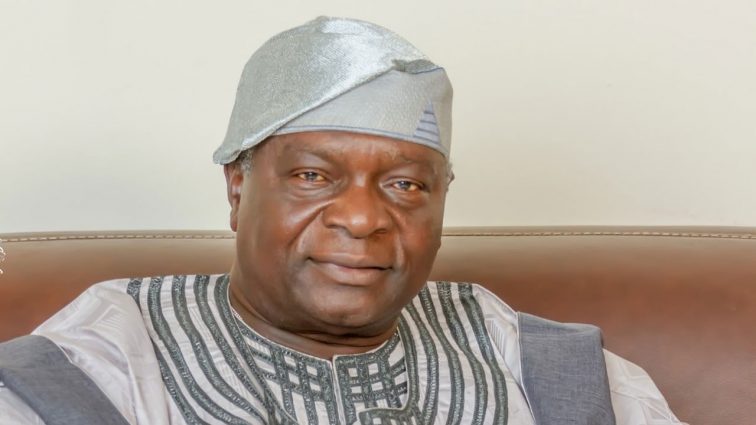
Former Governor of Osun State, Prince Olagunsoye Oyinlola
Warns sentiment, not the Constitution, is the real obstacle
Despite Loud Agitations, 46 Proposed States Fail Five Key Criteria
Former Governor of Osun State and retired Brigadier-General, Prince Olagunsoye Oyinlola, has called for urgent constitutional reform and good governance as prerequisites for sustainable state creation in Nigeria.
He argued that persistent agitations for new states, though understandable, are often rooted in regional sentiment and political imbalance rather than strategic national interest.
Oyinlola, who spoke during a live interview on Frontline, a current affairs programme on Eagle 102.5 FM, Ilese-Ijebu, decried Nigeria’s failure to amend its 1999 Constitution to reflect democratic and federal realities 26 years after the country returned to civilian rule.
“The military people who gave us the 1999 Constitution were not from Jericho or Gaza, they were Nigerians. It was the best of us who wrote it,” he said.
“But since the return to democracy, the Constitution should have been adjusted to reflect democratic realities. It’s been 26 years, and we’re still pointing fingers at the military.”
He insisted that while the Constitution may be flawed, the bigger problem lies with those operating it.
“The Constitution is only as good as the people operating it. There will always be loopholes to exploit, especially when there is no collective discipline or sincerity among political actors,” Oyinlola stated.
He rejected claims that the National Assembly, particularly the Senate, is solely to blame for the lack of reform, saying that the amendment process though cumbersome can be overcome if the political class is sincere.
“If an amendment is truly in the national interest, no chamber will oppose it. The issue is the lack of political will and consensus,” he said.
“Whatever is good for Nigeria should be acceptable to every region. If the process is too difficult, amend it.”
Recall that the House of Representatives Committee on Constitution Review on Wednesday, July 2, 2025, unveiled a schedule guide for zonal public hearings across the six geo-political zones of the country.
Addressing journalists at a press conference in Abuja, the Deputy Speaker of the House and Chairman of the Committee, Benjamin Kalu, said that the ongoing amendment of the 1999 Constitution must reflect the collective will and aspirations of the Nigerian people.
A History of Unresolved Agitations
The demand for state creation in Nigeria is not new. Since the country gained independence in 1960 with just three regions, it has undergone multiple restructurings from 12 states in 1967 to the current 36-state structure established by military fiat in 1996. However, since the return to democracy in 1999, no new state has been created despite dozens of memoranda submitted to various constitutional review committees by different ethnic and regional groups.

Oyinlola believes the stagnation is less about the Constitution and more about the political climate.
“There is a process clearly laid down in the Constitution. If the process is too cumbersome, then amend it,” he said.
“But the reason it is difficult to have state creations in a civilian regime is that there will be too much sentiment. Everyone wants many states from their region. At the end of the day, we’d end up with about 100 states.”
He cited the growing number of demands from different parts of the country, often fuelled by emotions, marginalisation, and perceived lack of federal presence.
“It is difficult for a civilian regime to create states because there is too much sentiment involved. Everyone wants more states carved out of their regions, and in the end, we are overwhelmed with endless demands,” Oyinlola lamented.
The Governance Gap and Structural Imbalance
While acknowledging the emotional drivers behind state creation; such as perceived marginalisation, access to power, and employment, Oyinlola argued that the agitation reflects a deeper governance failure and structural inequality among Nigeria’s six geopolitical zones.
“All of the above that you’ve mentioned; marginalisation, access to power, job opportunities are valid drivers,” he affirmed.
“But we also have to confront the structural imbalance. Some geopolitical zones have seven states, while others have just five. That inequality must be addressed.”
Citing the numerical advantage of the North, which has 19 states compared to the South’s 17, Oyinlola warned that political representation is skewed, and this breeds resentment in national discourse.
“If people genuinely felt the impact of governance, perhaps the agitation wouldn’t be this intense. But with 19 states in the North and 17 in the South, that numerical imbalance already creates tension.”
He dismissed the argument that landmass should determine state viability, insisting that population and service delivery should be the guiding metrics.
“We’re creating states for people, not for land,” he said.
“Landmass has advantages in terms of resource allocation, but population remains a key factor. States are meant to serve people.”
The Real Solution: Equity and Reforms
Despite the complexity of the issues, Oyinlola remained firm on one point: state creation should not be seen as the ultimate solution to Nigeria’s challenges. Rather, the country must first ensure equitable governance and constitutional reforms that reflect the will of the people.
“Should it be about state creations or good governance? What matters is equity,” he emphasized.
“Good governance should come before state creation. However, whatever is good for Nigeria should be good for every component of Nigeria. There must be equality.”
Oyinlola concluded with a call for sincere national dialogue aimed at strengthening institutions, reforming electoral processes, and ensuring that all Nigerians regardless of region feel represented and respected in the federation.
“After 26 years of democracy we are still talking about them [the military], then something is wrong. We’ve had democracy for decades now, yet many of our structures remain unchanged. It’s time to amend those laws and practices that do not dignify Nigerians or serve their rights,” he stated.
“All we need to do is prioritise our need in as much as the electoral process is concerned.”

His observation was recently reinforced by the House of Representatives Committee on Constitution Review, On Tuesday, July 29, 2025, which revealed that none of the 46 proposals for new states submitted during the latest review cycle passed the required benchmarks.
According to the committee, these proposals failed on five major grounds, Failure to meet constitutional requirements, Lack of broad-based public consensus, Weak economic viability, No clear administrative justification, Potential to worsen ethnic and communal tensions.
While the calls may be loud, the reality is sobering.
According to Section 8 of the 1999 Constitution, the creation of a new state must meet five near-impossible checklists:
- Endorsement by two-thirds of elected representatives (senators and House members) from the affected areas.
- Two-thirds approval from the State House(s) of Assembly and the Local Government Councils involved.
- A referendum backed by two-thirds of registered voters in the area.
- Simple majority approval by a majority of all states in Nigeria.
- Two-thirds majority support from both chambers of the National Assembly.


 Eagle Fm