TAX REFORMS: “SOME NIGERIANS DON’T UNDERSTAND THE TAX REFORMS, THEY JUST WANT TO CRITICISE IT” — OLAYINKA
Written by Oluwaseyi Amosun on December 22, 2025

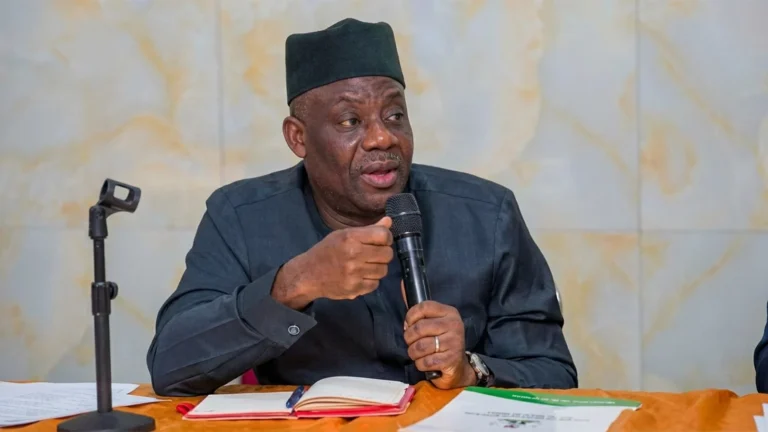
Image of Mr. Sidiku Olayinka
Economic policy investment banker Sidiku Olayinka has said public criticism surrounding Nigeria’s tax reform agenda is largely driven by misunderstanding, rather than the substance of the reforms themselves.
Speaking during an exclusive interview on Frontline, a current affairs programme, on Eagle 102.5 FM, Ilese, Ijebu. Olayinka addressed concerns over the tax reform bills, the Federal Government’s Memorandum of Understanding with France on digital taxation, and fears of data interference, insisting that the reforms are necessary and unavoidable.
DISCREPANCIES IN THE TAX REFORM BILLS
Responding to questions on whether discrepancies could exist between the tax reform passed by the National Assembly and what was originally presented by the Federal Government, Olayinka attributed much of the confusion to poor public understanding.
“Not a lot of people understand the tax reforms; they just want to criticise them,” he said. “I don’t think the reforms are perfect, but that is why discussions like this are important.”
He urged the government to focus on public education around the reforms, particularly on corporate income tax, VAT, capital gains tax, and other provisions.
IMPLEMENTATION BEGINS JANUARY
Olayinka said the Federal Government is committed to commencing the reforms in January, regardless of public resistance.
“Whether we like it or not, the reforms will begin by January,” Olayinka asserted. “The important thing is for people to understand what to pay, where to pay, and how to pay.”
He added that misinformation could derail compliance if left unchecked.
WHO WILL PAY TAX UNDER THE NEW SYSTEM?
Clarifying the scope of the reforms, Olayinka said taxation would be determined by income, not age.
“If a person under 20 earns up to ₦100 million, they will pay tax,” he noted. “Tax has nothing to do with age; it is about income.”
He explained that students receiving modest allowances would remain exempt, while high-earning individuals would be captured by the system.
DATA PRIVACY AND FOREIGN INTERFERENCE FEARS
Olayinka dismissed claims that Nigeria’s partnership with France could lead to foreign control of the country’s tax system or democratic processes, describing such narratives as misleading.
“Nigeria is a complete democracy, and by the manner of collaboration, we are one of the best democracies in Africa,” he said. “The idea that an international body will come in to invade our electoral or democratic process sounds like propaganda.”
He explained that France was chosen because of its advanced digital tax infrastructure and experience in deploying such systems across several regions of the world.
WHAT FRANCE IS OFFERING NIGERIA
According to Olayinka, France’s role is strictly technical and does not involve access to sensitive taxpayer information.
“What should worry people is not interference,” he said. “France will not have access to the details of Nigerian taxpayers. They are coming to provide digital expertise.”
He listed AI-powered audits, automated compliance systems, real-time analytics, and cybersecurity support as part of the collaboration.
“The world has moved beyond basic computer systems,” he added. “Nigeria is just entering a digitised tax system, and we do not yet have the sophistication to run a full AI-based process on our own.”
TECHNOLOGY GAP AND CAPACITY BUILDING
Olayinka said Nigeria’s lack of technological capacity makes external support necessary, stressing that the goal is long-term self-reliance.
“What France is offering is the capacity to help us build our own systems and train our own people.” “This is not a military or social takeover. It is about technology and economic efficiency.”
He noted that global cyber threats make it essential to modernise tax administration.
“Cybercrime, cyber invasion and even terrorism exist today,” he said. “You cannot run a modern tax system without advanced safeguards.”
LIMITS OF THE PARTNERSHIP AND CYBERSECURITY CONCERNS
While acknowledging public fears, Olayinka said the government must strictly monitor the scope of the agreement.
“Interference with data is one thing that must never happen,” he said. “There must be clear assurances that there is no data sharing.”
He warned that any breach could validate public concerns.
“If taxpayer data is exposed, then the fears of the people would have been proven,” he added.
Hardship Concerns and Economic Reality
Addressing fears that the reforms could worsen economic hardship, Olayinka said resistance to taxation is natural but unavoidable.
“Nobody likes to pay tax,” he expressed. “Many Nigerians are not used to paying beyond VAT and withholding tax.”
He stressed that small businesses, pensioners, and low-income earners would be protected.
“A pensioner earning rent to survive will not be taxed,” he said. “Small businesses with limited liability structures may pay zero corporate income tax for a long period.”
Olayinka acknowledged that the early stages of implementation may be challenging.
“We will make mistakes from January to June, but they will be corrected as we move forward.”
He noted that Nigeria is expected to significantly scale up tax collection by 2026, making robust systems essential.
“We need a strong technological foundation to support what is coming; that is the only way this reform can work.”

 Eagle Fm