“THE HARDSHIP WILL NOT GO OVERNIGHT” — SEGUN ONI DEFENDS REFORMS, URGES CAUTION ON ECONOMIC EXPECTATIONS
Written by Oluwaseyi Amosun on April 22, 2026
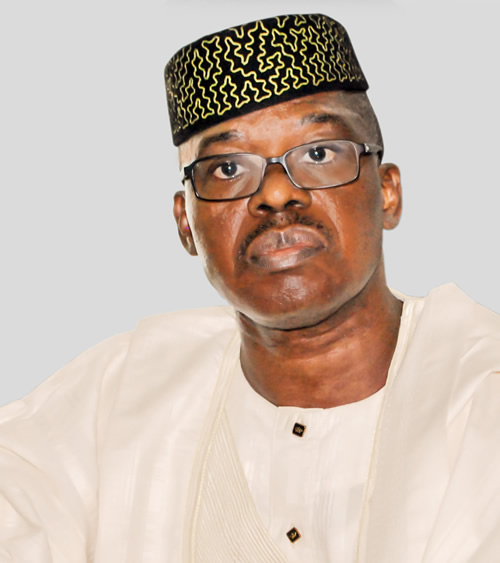
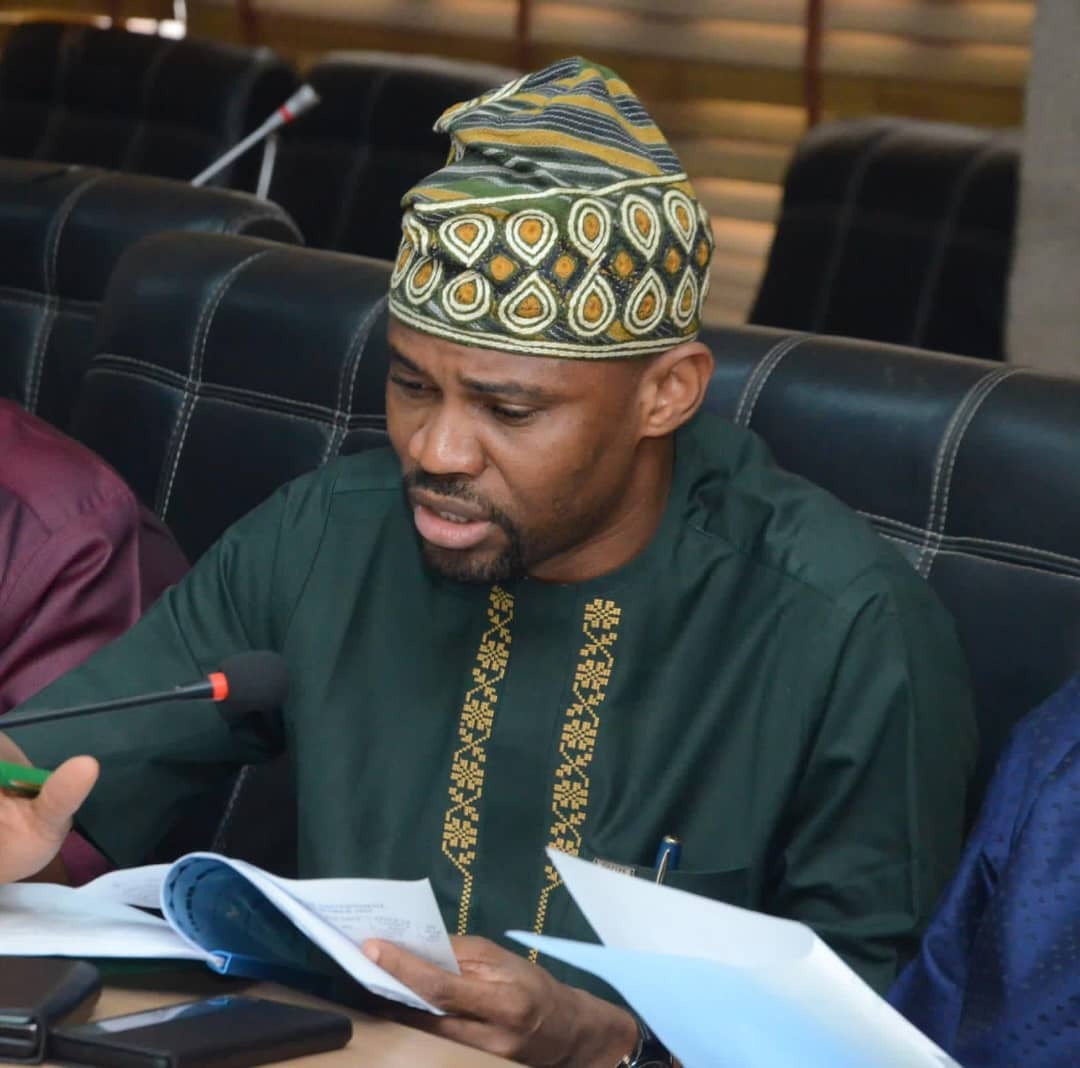
photo File: Segun oni
Former Ekiti State Governor, Segun Oni, has maintained that Nigeria’s current economic hardship cannot be resolved in the short term, insisting that ongoing reforms will take time before their benefits fully reflect in the daily lives of citizens.
He made this position on Wednesday during an exclusive media chat on Frontline, a current affairs programme on Eagle 102.5 FM, Ilese Ijebu, Ogun State, where he also defended aspects of the administration’s economic direction while acknowledging the pressure on households across the country.
Oni opened his remarks by drawing attention to what he described as emerging signs of stability in Nigeria’s macroeconomic environment, particularly in relation to exchange rate behaviour and investor perception.
He noted that foreign investors are naturally attracted to countries where economic indicators are not constantly shifting unpredictably, and he argued that Nigeria is beginning to present some of those signals, even if challenges remain. However, he stressed that stability should not be mistaken for prosperity, warning that citizens still feel the weight of inflation and high living costs.
In his words, “I’m not surprised that foreign investors are getting more interested because where there is stability, of course, the investment world will take positive interest. The stability that we got is what we should be applauding as Nigerians because a few years back I said that the performance on the economy has been very commendable. The first thing that all of us must applaud is the stability because that is what brings investment. The stability of the economic indices, not one today, fifteen tomorrow. The currency has been stable, and I’m sure investors from all over the world would note that positively. But we are not where we should be yet. The absolute value of the exchange rate is still important, and we still want to see improvement in the value of the Naira.”
EXCHANGE RATE PRESSURE AND INFLATION LINK
He further explained that exchange rate stability alone does not solve inflation, arguing that domestic production must also improve if prices are to truly ease for citizens. According to him, Nigeria’s inflationary pressures are deeply connected to weak production systems, especially in agriculture, where insecurity has disrupted output and reduced farmer productivity across several regions. He added that until these structural issues are addressed, inflation will continue to respond slowly even if macroeconomic indicators appear stable.
He said, “The exchange rate boosts inflation, and inflation will be affected by domestic output. Domestic output, unfortunately, is suffering from the agri-sector where we are strongest, but it is suffering in the hands of insecurity. Farmers are not as productive as they should be because the security index is very poor, and this affects everything else in the economy. We must encourage the security agencies, especially the military, they are doing a commendable job. I believe citizens should find ways to complement them by passing credible intelligence so that they will be able to strike and strike accurately. When we hear of kidnapping or even rumours of kidnapping, everybody becomes jittery, and that alone affects economic activity.”
HARDSHIP, REFORMS AND REALITY ON THE GROUND
On the issue of hardship, Oni acknowledged that reforms such as subsidy removal and foreign exchange unification have created immediate pressure on citizens, even if they may be structurally necessary in the long run. He argued that the reality of economic transition is often painful and uneven, and that governments must be honest about the time required before relief becomes visible. While he supported reform continuity, he insisted that the burden on citizens must remain a central concern.
He stated, “The hardship will not go overnight, and we have to understand that. Government should do more to bring the hardship down, but it will not go overnight, and we must recognise that reality. The prices may be stabilising in some sense, but the pressure on citizens is still very high.”
PALLIATIVES AND INSTITUTIONAL SUPPORT SYSTEMS
Oni also addressed the use of palliatives, expressing caution about over-reliance on direct distribution systems while still acknowledging their necessity under current conditions. He argued that relief efforts must be better structured and routed through institutions that can ensure broader and more sustainable impact, rather than ad-hoc distributions that may not reach the most vulnerable. According to him, education and faith-based structures could serve as more efficient channels for support delivery.
He said, “I am not a fan of palliatives, but we have to do it. There must be palliatives, and they must be done wisely and constructively. Institutions like educational institutions, institutions of worship and structured systems can be used to deliver support more effectively.”
GOVERNANCE AT STATE LEVEL
When asked about whether state governments were doing enough to complement federal economic efforts, Oni took a cautious position, stating that he would not make definitive judgments without access to financial records and operational realities of subnational governments. However, he maintained that governance at all levels must be more responsive to citizens’ immediate needs, especially in times of economic stress.
He stated, “I cannot say they are doing enough or not doing enough because I don’t have access to the books. But I believe every level of government should be encouraged to do more and find constructive ways of meeting the citizens where they are.”
DEMOCRACY, POLITICAL STRUCTURE AND PARTY PROLIFERATION
A significant part of his intervention focused on Nigeria’s political system, where he expressed concern over what he described as excessive fragmentation of political parties. He argued that while multi-party democracy is essential, too many parties weaken accountability and encourage opportunistic defections that are not driven by ideology or policy differences. In his view, Nigeria’s democratic structure is gradually drifting toward instability rather than consolidation.
He said, “To be honest, we are regressing. We are on the reverse. What causes it is very simple. Going into so many political parties will never help democracy. If Nigeria had limited itself to three parties, we probably would be getting it better now. But 21 political parties or whatever number only creates opportunism
PARTY MANAGEMENT AND STRUCTURAL WEAKNESS
Oni further argued that many political parties in Nigeria lack internal structure and meaningful grassroots engagement, leading to repeated cycles of collapse and regrouping among political actors. He insisted that poor party management is a deeper problem than party proliferation itself, and he called for stricter standards that would ensure only viable political organisations remain active in the system.
He added, “We are already corrupting democracy ourselves. Some of these parties will hardly campaign. If they get a thousand votes, it will be by mistake. So we should review the number of political parties and set standards that determine whether they remain active or not.”
REGULATION AND ELECTORAL THRESHOLDS
He proposed a performance-based system where political parties would be evaluated periodically based on their electoral strength, arguing that such a system would strengthen democratic accountability. According to him, parties that consistently fail to meet minimum electoral benchmarks should not continue to operate as national platforms, as doing so drains institutional credibility and public resources.
He explained, “We should put a process in place to evaluate and weed political parties progressively every year based on performance. We should set a minimum percentage vote in national elections that a party must achieve to remain registered.”
DEMOCRATIC FREEDOM AND LIMITS
Responding to concerns that such reforms may undermine democratic freedom, Oni argued that democracy must still operate within structured limits that reflect actual public support. He maintained that freedom in politics is ultimately expressed through votes, and not merely through the existence of multiple platforms without public backing.
He stated, “I don’t think we can take democracy in absolute terms. If a political party is acceptable, it will reflect in votes. If it is not acceptable, it will continuously fail. Should we continue to waste national resources maintaining parties that people do not support?
PARTY COALITIONS AND POLITICAL MOVEMENTS
Oni also commented on emerging political coalitions and defections, noting that such movements are normal in democratic systems but often reflect deeper issues of leadership failure within existing parties. He argued that political strength should be built through effective management rather than constant restructuring or formation of new platforms.
He said, “Political parties are about people. If people believe in you, they will support you. If they don’t, they will reject you. That is democracy. The people will decide, not just the big names moving from one party to another.”
RETURN TO APC AND POLITICAL EXPERIENCE
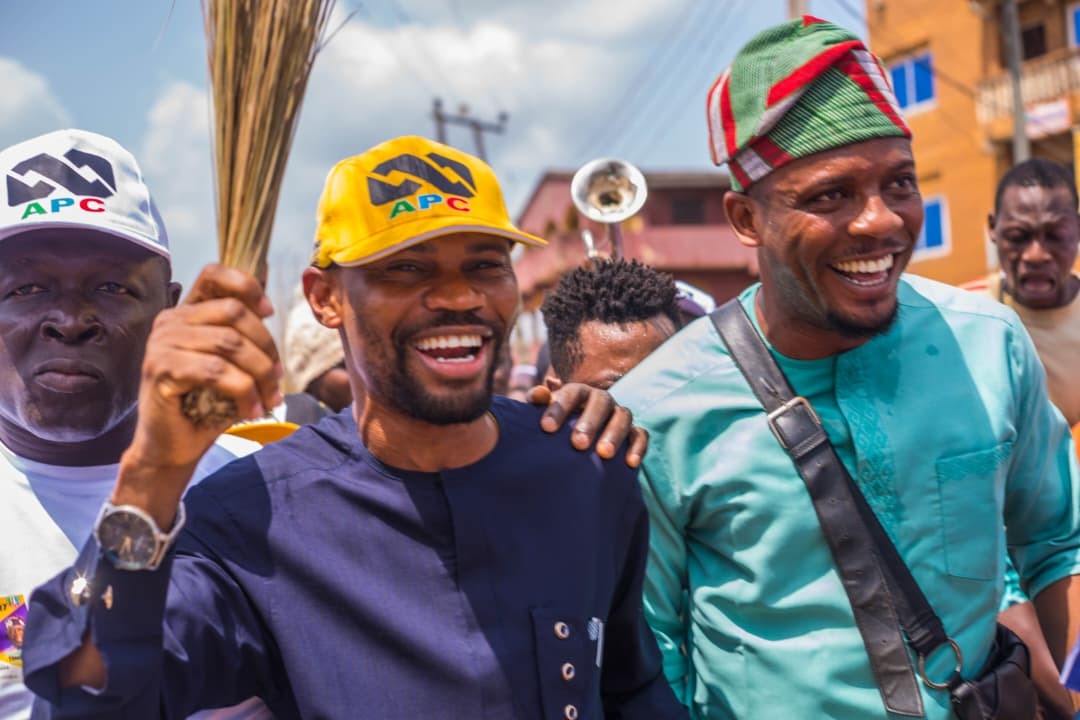
On his own political alignment, Oni confirmed his membership of the All Progressives Congress, stating clearly that his position is not ambiguous or conditional. He emphasized that political identity should be stated plainly, especially in a system where alliances and affiliations often shift rapidly.
He stated, “I belong to APC. I’m not ashamed or afraid to say it.”
He further explained that his return to the APC was informed by comparative political experience across different parties, adding that his decisions were shaped by personal evaluation rather than sentiment. He noted that political choices are often relative, based on performance and internal dynamics of parties rather than absolute loyalty.
He explained, “My decision to return to the APC is because I went elsewhere and I could compare what I got. I’ve been a member of three political parties in present-day Nigeria. I’ve been a member of the BDP, I’ve been a member of the APC, I’ve been a member of the LDP. If you ask me on every occasion why I had to leave, I will tell you. And I still believe that my thinking was right. But you will not also continue to run around, you will also make comparisons. If you are not going to take it in the absolute, you are going to take it in the relative. Relatively, I believe I am better off and I believe I am taking the right decisions.”
POSITION ON GOVERNANCE AND ECONOMY
Oni concluded by reiterating that Nigeria’s challenges require patience, structured reforms, and consistent policy direction. He warned against extreme expectations of quick fixes, insisting that economic transformation is gradual and must be understood within its broader structural constraints. While acknowledging hardship, he maintained that stability remains a necessary foundation for recovery.
He also reinforced that his comments were not intended to present an overly positive picture of the situation, but rather a balanced interpretation of ongoing developments, stressing that both progress and problems must be acknowledged simultaneously in national discourse.

 Eagle Fm