OBI IS THE MOST POPULAR CANDIDATE IN NIGERIA TODAY – YINUSA TANKO
Written by Oluwaseyi Amosun on May 13, 2026
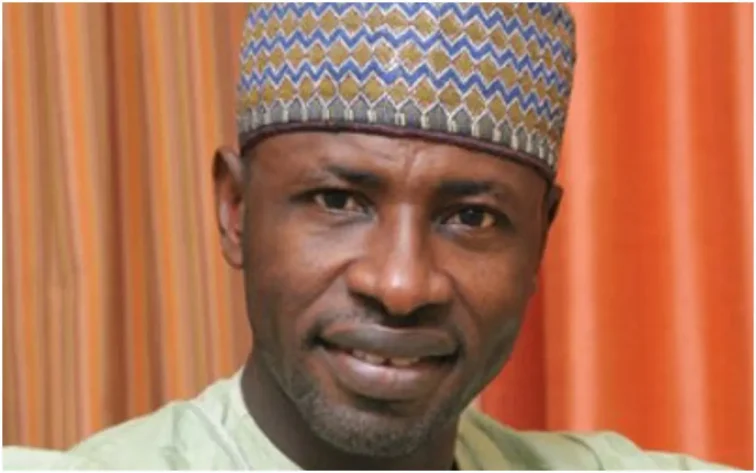
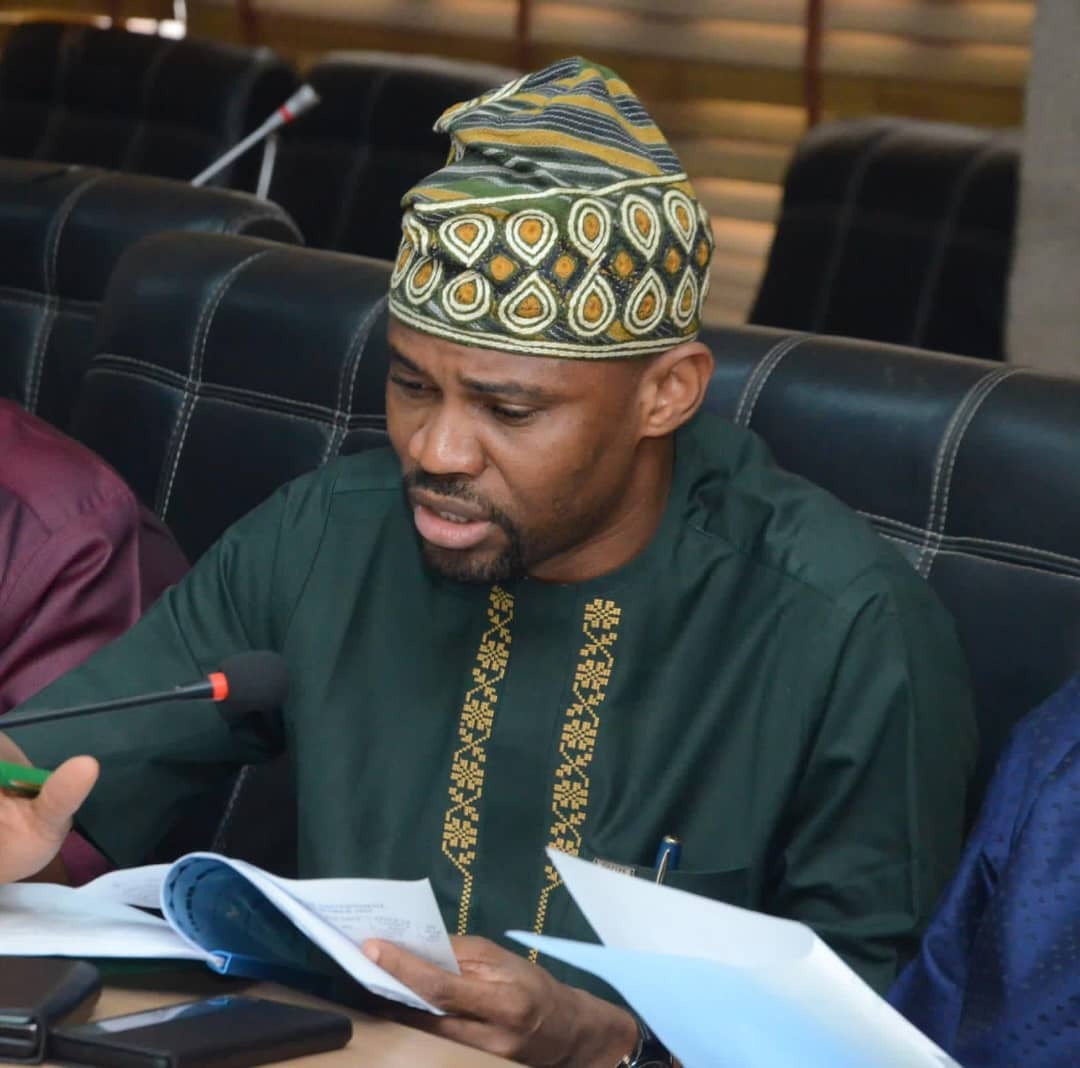
Dr. Yunusa Tanko
The National Coordinator of the Obidient Movement Worldwide, Dr. Yunusa Tanko, has declared that the most popular political figure in Nigeria at present is former presidential candidate, Peter Obi, insisting that his appeal cuts across regions and continues to grow despite ongoing political realignments ahead of the 2027 general elections.
He made the assertion on Wednesday during an exclusive interview on Frontline, a current affairs programme on Eagle 102.5 FM, Ilese Ijebu, Ogun State, where he assessed the current strength of opposition politics and the evolving dynamics of political support across the country.
According to him, popularity in Nigerian politics is no longer defined by institutional backing alone, but by the ability to mobilise mass followership across different social and regional divides, a space he said Obi continues to dominate.
Dr. Tanko argued that despite criticisms and political resistance, Obi’s influence remains visible across the country, particularly among young people and first-time voters who have continued to identify with his political message and leadership style.
He insisted that no other candidate currently matches Obi’s level of mass mobilisation, stressing that political movements tied to him have continued to expand even as opposition coalitions undergo restructuring.
He said, “At the moment, the most popular candidate in Nigeria today is His Excellency, Mr. Peter Obi. Go and verify. And he is a southerner, go and verify. The most popular candidates of southern extraction, including those who are in the presidency at the moment now, is His Excellency, Mr. Peter Obi. That is the reason why everywhere he goes, they are always trying to bring him down. Everywhere.”
He maintained that Obi’s political visibility is not accidental but a reflection of sustained grassroots engagement and what he described as consistent public trust built over time through direct engagement with citizens.
Dr. Tanko argued that political popularity should be measured not only by party structure but also by the emotional and civic connection between a candidate and the electorate, which he said Obi continues to maintain strongly.
He further stressed that attempts to downplay Obi’s influence are often responses to his growing political relevance rather than a reflection of diminishing support.
He said popularity in the current political climate is fluid, but Obi continues to maintain a strong advantage due to widespread identification with his message of accountability, governance reform, and citizen-focused leadership.
Dr. Tanko maintained that the strength of Obi’s support base lies in its structureless but highly mobilised nature, which allows rapid expansion across different regions and demographics.
He argued that this type of political movement is difficult to suppress because it is driven more by conviction than by institutional control.
He said, “At the moment, let me confirm to you, is Mr. Peter Obi running independently without another support, just like he did in 2023? Obviously, no. Now we have The Kwankwasiyya Movement joining the Obedience movement supporting him. It’s a coalition. It’s an agreement. Let’s work together.”
According to him, the merging of political movements around Obi reflects a growing coalition of interests that continues to strengthen his political relevance ahead of 2027.
Dr. Tanko maintained that coalition-building is not a sign of weakness but a strategy of consolidation, as different groups align to increase their collective political strength.
He added that political alliances around Obi demonstrate expanding trust in his leadership capacity and long-term political vision.
He said, “Other people will come. Other people are already coming in. It’s a coalition. A coalition does not necessarily mean that specific name of persons must be in it. It means compilation of different, different forces, different, different groups.”
He further argued that coalition politics in Nigeria is becoming more dynamic, with shifting alliances forming around shared interests rather than rigid party loyalty.
Dr. Tanko insisted that Obi’s political rise reflects a broader dissatisfaction with existing political structures, which he said is driving citizens toward alternative platforms.
He maintained that mass movement is the strongest indicator of political popularity in a country as diverse as Nigeria, and according to him, Obi currently leads in that regard.
He said, “As we speak, there is no single candidate or aspirant in Nigeria that can move millions of people within a short period of time, apart from his excellency, Mr. Peter Obi. Maybe tomorrow, but for now, none. He moved from PDP to Labour Party, millions followed him.”
Dr. Tanko added that Obi’s political transitions have consistently been followed by significant portions of his support base, a pattern he said demonstrates loyalty beyond party structures.
He argued that such movement indicates a personal connection between candidate and supporters that transcends traditional political party affiliations.
He said, “He moved from Labour Party to ADC, millions followed him. He moved from ADC to NDC. Today they are registering about 12.5 million members. Go and check the records and tell me who is popular.”
He maintained that this level of mobilisation reflects sustained political relevance and growing influence across the electorate, particularly ahead of the 2027 elections.
He insisted that political outcomes remain open, shaped by voter sentiment, mobilisation strength, and coalition dynamics rather than fixed assumptions about regional or incumbent advantage.
He said the coming election will ultimately test the strength of political movements across Nigeria, adding that popularity, not speculation, will determine the outcome at the ballot.
ZONING OF PRESIDENCY TO THE SOUTH

Dr. Tanko strongly defended the position of the movement and coalition actors who have endorsed zoning the presidency to the southern region, insisting that it reflects a strategic attempt to promote unity and balance within Nigeria’s political structure ahead of the 2027 elections. He maintained that zoning remains a necessary political arrangement that helps manage national cohesion in a diverse federation like Nigeria.
He argued that the decision is not exclusionary but rather a stabilising mechanism aimed at ensuring fairness and continuity in leadership rotation across regions, stressing that it is also supported by emerging coalition voices within the opposition space.
He said, “Of course. The presidency has already been zoned to the south, which is a lot. So, if they are coming in, they are coming to support us. We need everybody. This election cannot be won by one person. Already, we’ve already taken our position. This election should be zoned to the south for obvious reasons, for the cause of unity. And I thank His Excellency, Former Governor of Bayelsa State, Seriake Dickson, for taking this bold step. Because the presidency at the moment is in the south, it’s not in the north.”
CLARIFICATION ON OBI’S ONE-TERM POSITION
Dr. Tanko also clarified the controversy surrounding Peter Obi’s reported commitment to a single-term presidency, describing it as a voluntary political promise aimed at building trust and reducing political tension. He maintained that Obi’s stance should be understood within the broader context of political accountability and national reassurance.
He said, “Well, I have been together with a lot of people, I’ve never seen the kind of commitment that His Excellency Mr. Peter Obi has for the interests of this country. It is so unique and so heartwarming, and let me say why I said this; While they are talking about how they want to run for election, Mr. Peter Obi has said that he was going to run for one term. He made it public. He’s a man that keeps to his promise. He doesn’t want to be seen as somebody who talks and cannot do it. So in order to portray that, do you know what he did, which is very rare, very rare to any political politician, His Excellency Mr. Peter Obi made it clear on the day of the convention and it was announced publicly that to ensure and confirm what he has promised Nigeria, especially our brothers in the northern part of the country, he will serve for four years. And when it comes to 2031, after four years, the rotation will go back to the north, particularly to the northwestern region. Interestingly also, most likely to go to Engineer, Rabiu Musa Kwakwanso.”
OBIDIENT VS OBEDIENT MOVEMENT

He further used the moment to clarify a recurring identity confusion between “Obidient Movement” and “Obedient Movement,” insisting that both are distinct in structure, leadership, and identity, despite public misunderstanding and external attempts to blur the distinction.
Tanko said, “I have seen them. And then I didn’t really respond to it very much because if they want anything, they should treat their tacos with the Obedient movement worldwide and see the response, which they have seen anyway. It is all part of the infiltrated people that are being given money. I even heard from media that they gave them 10 million Naira to go and do that particular statement that they did. You can even see they are not talking even about the obedience movement that I, His Excellency Mr. Peter Obi is leading and me, the national coordinator, is leading. They have their own OBE, OB. I am leading obedient movement. So there are differences. OBE is different from OBI. We are leading a leadership of the obedient movement. His Excellency Mr. Peter Obi is the leader of the obedience movement and I am the national coordinator.”
NDC STRUCTURE, SERIAKE DICKSON, AND CALL FOR VOTER REGISTRATION

Dr. Tanko further defended the legitimacy and stability of the Nigeria Democratic Congress (NDC), insisting that the party’s legal standing had been resolved through court processes and that its leadership structure under Bayelsa State Governor, Seriake Dickson remained intact, referencing Dickson, as part of the broader coalition alignment supporting southern zoning and political unity.
He urged Nigerians to actively participate in the electoral process by registering and mobilising at the grassroots level, stressing that voter engagement remains the strongest tool for democratic change ahead of 2027.
He said, “So they are solidly on ground with no any issue. You can confirm this particular position from the court as it were. So their issues have been status bar and everything is clean and clear for them to present. And that is the reason why INEC was also at the national convention that held just a few days ago in Abuja.”
He added on mobilisation:
He said, “What we are doing is to continue to mobilize. We now have our structure in every part of the country. From the states, to the local government, to the world, we continue to build. The name Obidient now is everywhere. In fact, if you identify your local government for me, I will tell you those who are there, three, three of them, each local government working assiduously to continue to mobilize. Ours is to mobilize and ensure that we have candidates that are capable of running. We have people who are ready to vote. We are also asking everybody to go and register because the INEC has opened the portal now and we are advocating for that.”
CALLERS’ SEGMENT & RESPONSES
During the call-in segment of the programme, listeners raised concerns ranging from electoral uncertainty to allegations of ethnic bias and the credibility of the movement’s internal structure. Dr. Tanko responded by reinforcing confidence in the Obidient Movement’s structure and dismissing claims of division or tribalism within its ranks.
He maintained that the movement is focused strictly on good governance and national unity, insisting that its agenda is not driven by ethnic or sectional interests but by a demand for accountability and leadership reform.
Responding to a caller who questioned what happens if Peter Obi is not declared winner of the election, he emphasized confidence in electoral processes while also hinting at internal safeguards.
He said, “But we are just assured that we will fight for our mandate.”
On concerns about tribalism and internal divisions, he insisted that the movement does not promote ethnic bias and remains centered on governance.
He said, “The obedient movement are people, resilient young men and women, including the Aged. What they want is just good governance. Good governance. Nothing more, nothing less. Have you ever, by any stroke of chance, seen Mr. Peter Obi abusing anybody or using tribalism? No, you won’t see it. Have you ever, by mistake, seen him insulting or accusing anybody? I won’t do it.”
He concluded by urging supporters to focus on voter registration and grassroots mobilisation, stressing that electoral participation remains the strongest tool for political change.
He said, “Mobilize. Organize. Go back to your wards. Go back to your polling units. Around your house. Mobilize. Make sure you register. Because it’s only those who have the voter’s card that can make meaning. If you don’t have it, you cannot vote.”

 Eagle Fm