FORMER DEFENCE CHIEF BACKS ARMY EXPANSION, URGES INVESTMENT IN PERSONNEL, LOGISTICS
Written by Oluwaseyi Amosun on July 29, 2026
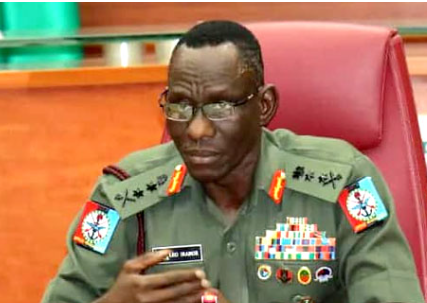
Photo File: General Lucky Eluonye Irabo
Former Chief of Defence Staff (CDS), Gen. Lucky Irabor (retd.), on Wednesday said the Federal Government’s proposed expansion of the Nigerian Army from eight to 12 divisions would require massive investment in personnel, equipment, logistics and infrastructure to deliver the desired results.
Irabor spoke during an appearance on The Morning Show on Arise Television while reacting to President Bola Tinubu’s announcement of plans to strengthen the Armed Forces through the creation of additional Army divisions and the recruitment of 28,000 soldiers.
The retired General described the proposal as a strategic move capable of improving the country’s security architecture but warned that expanding the Army without adequately addressing existing deficiencies could undermine the objective of the initiative.
According to him, the immediate priority should be to ensure that the current eight divisions are fully equipped and manned before adding new formations.
“The expansion of the Nigerian Army from eight divisions to 12 divisions is the right step in the right direction,” he said.
Irabor noted that the President’s recognition of the military’s operational challenges was encouraging, saying effective leadership begins with a clear understanding of institutional shortcomings.
“It is quite heartwarming to know that the Commander-in-Chief himself is well abreast of the shortcomings of the military. If he’s starting with the Army, perhaps that’s a good step. I believe that the Navy and the Air Force will be part of the efforts,” he said.
He stressed that establishing four additional divisions would require far more than announcing their creation, explaining that each division must be supported with adequate personnel, combat platforms, communications systems, transportation assets, accommodation, medical facilities and logistics infrastructure.
“First, the existing eight divisions must be properly brought up to scale in terms of personnel, equipment, logistics and so on. I want to believe that the President is well aware of the implications of all that,” Irabor said.
He explained that military effectiveness depends not only on troop numbers but also on the availability of modern equipment, intelligence capabilities, mobility assets and sustained logistics support.
According to him, troops deployed to various theatres of operation must be adequately equipped and motivated if they are to confront the country’s growing security challenges, including terrorism, banditry, kidnapping and other forms of violent crime.
The former defence chief also welcomed the Federal Government’s plan to recruit 28,000 soldiers, describing it as a significant boost to the Army’s manpower.
He, however, pointed out that the proposed recruitment represents only a modest increase when measured against the personnel requirements of four new divisions.
“But of course, it’s also good to start from somewhere, meaning that a lot has to go into accommodation for the troops,” he said.
Irabor said the planned recruitment would inevitably require substantial investment in barracks, training institutions, instructors, healthcare services and welfare packages to ensure the new personnel are properly integrated into the Armed Forces.
He added that recruitment alone would not solve the military’s manpower challenge unless it is accompanied by continuous training, improved welfare and retention policies that would keep experienced personnel in service.
The retired General expressed optimism that the Federal Government would commit the necessary resources to make the proposed reforms successful, noting that strengthening the Armed Forces is critical to addressing Nigeria’s security challenges.
President Tinubu had announced plans to increase the strength of the Nigerian Army by expanding it from eight to 12 divisions and recruiting 28,000 additional soldiers as part of broader efforts to enhance national security and improve the military’s operational capacity.
Security analysts have argued that the expansion, if properly funded and implemented, could improve troop deployment across the country’s multiple conflict zones, while also enhancing the military’s capacity to respond rapidly to emerging security threats.
However, they have consistently maintained that increased funding, acquisition of modern military hardware, improved intelligence gathering, enhanced inter-agency collaboration and better welfare for personnel remain essential for the Armed Forces to achieve lasting success in the fight against insecurity.




 Eagle Fm