BEFORE OSUN VOTES AGAIN: THE 2007 ELECTION DISPUTE THAT PUT THE STATE ON A DIFFERENT ELECTORAL CLOCK
Written by Oluwaseyi Amosun on August 14, 2026
Report by Emmanuel Shonibare & Taofeek Hammed
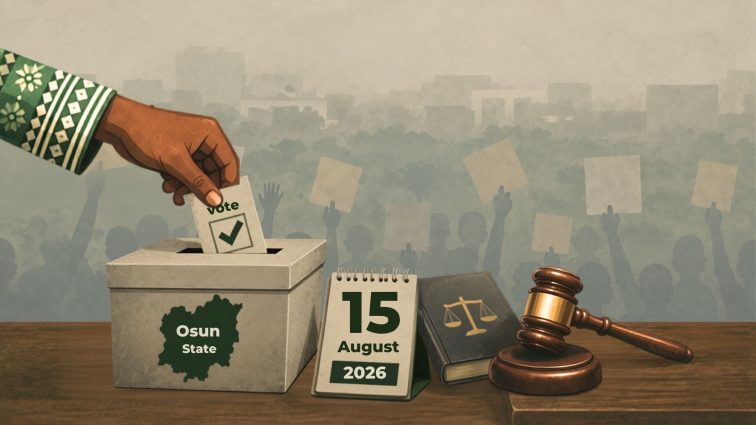
On Saturday, August 15, 2026, voters across Osun State will return to the polls to elect a governor, months ahead of Nigeria’s next general elections, which begin with presidential and National Assembly elections on January 16, 2027, followed by governorship and State House of Assembly elections on February 6, 2027.
The Independent National Electoral Commission has fixed August 15 for the Osun governorship election, confirming the state’s place among Nigeria’s off-cycle governorship states. The exercise will hold across Osun’s 30 local government areas, 332 registration areas and 3,763 polling units, with 2,339,233 registered voters on the roll.
But why does Osun vote for governor when most of the country is preparing for a general election at a different time?
The answer goes back almost two decades, to a governorship election held on April 14, 2007, and to a legal battle between former Governor Olagunsoye Oyinlola and his challenger, Rauf Aregbesola, that ran through election tribunals and the Court of Appeal before a judgment in November 2010 changed the direction of the state’s politics.
The court’s decision did not set out to redesign Osun’s electoral calendar. But because the legal battle over the 2007 election lasted more than three years, the candidate eventually declared the winner did not assume office until November 2010. That delayed transition became the foundation of Osun’s separate governorship cycle.
In simple terms: Osun’s off-cycle status is a consequence of when the disputed 2007 election was finally resolved in court, and when the successful candidate actually took office.
April 14, 2007: The election that started the chain
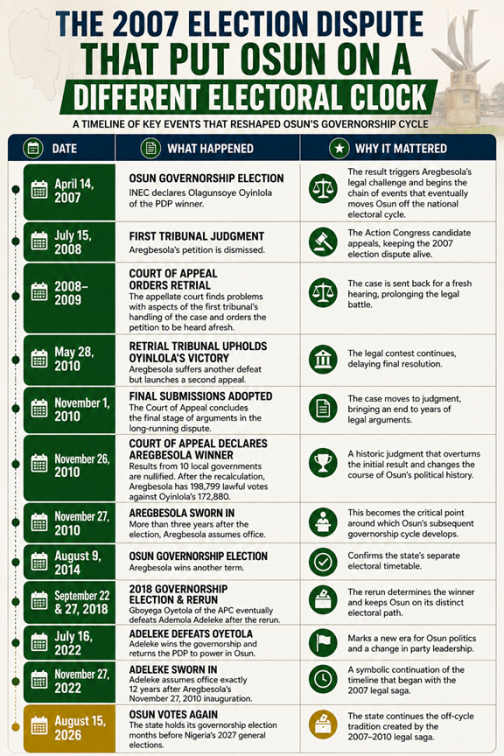
The story begins with the 2007 general elections. On April 14, 2007, Osun voters went to the polls to elect a governor. INEC declared Olagunsoye Oyinlola of the Peoples Democratic Party the winner, with 426,666 votes to Aregbesola’s 240,722.
Aregbesola rejected the result and took the fight to the election petition tribunal, alleging that the election was affected by irregularities, violence and non-compliance with the Electoral Act 2006. His petition focused on the conduct of the election in ten local government areas: Atakunmosa West, Ayedaade, Boluwaduro, Boripe, Ife Central, Ife East, Ife South, Ifedayo, Isokan and Odo-Otin.
It is worth being precise on this point, because the number has been misreported before. Aregbesola’s original petition to the retrial tribunal in 2010 named a slightly different list of local governments, including Ede North and Ola Oluwa. But the final Court of Appeal judgment in November 2010, the one that actually decided the case, nullified results in ten local government areas only, and Ede North and Ola Oluwa were not among them. Any account of the case that lists twelve LGAs, or that includes Ede North and Ola Oluwa in the final judgment, is describing an earlier stage of the litigation, not the outcome.
The first tribunal defeat
Aregbesola’s first attempt to overturn the result failed. The original tribunal, led by Justice Thomas Naron, dismissed his petition on July 15, 2008. He appealed, and the Court of Appeal found problems with how the tribunal had handled the evidence before it. It ordered the case heard afresh before a newly constituted tribunal.
Oyinlola remained governor throughout. Aregbesola remained the challenger. The question of who had actually won Osun stayed unresolved for years after the ballots were cast.
A second tribunal, another defeat
A new five member tribunal, led by Justice Ali Garba, heard the retrial. On May 28, 2010, it again dismissed Aregbesola’s petition and upheld Oyinlola’s election.
Aregbesola appealed once more, this time arguing that the tribunal had wrongly treated his allegations of electoral non-compliance as criminal allegations requiring proof beyond reasonable doubt, and that it had failed to properly weigh the evidence of malpractice in the disputed areas. Final submissions were adopted before the Court of Appeal on November 1, 2010.
By then, more than three years had passed since Osun voters first cast their ballots. The election had become, in effect, a legal question: did the original result reflect the lawful will of the electorate?
November 26, 2010: The judgment that changed Osun
On Friday, November 26, 2010, the Court of Appeal sitting in Ibadan delivered its judgment in Rauf Adesoji Aregbesola & 2 Ors v. Olagunsoye Oyinlola & 2 Ors. The five member panel was led by Justice Clara Bata Ogunbiyi, sitting with Justices Mohammed Lawal Garba, Paul Adamu Galinje, Chima Centus Nweze and Adamu Jauro.
The judgment was unanimous. The court found that the conduct of the election in the ten disputed local governments did not substantially comply with the Electoral Act and nullified the results from those areas. Once the disputed votes were removed, Oyinlola’s total fell from 426,666 to 172,880, while Aregbesola’s fell from 240,722 to 198,799, giving Aregbesola the majority of the remaining lawful votes.
On that basis, the court declared Aregbesola the duly elected governor of Osun State, ordered INEC to withdraw Oyinlola’s certificate of return and issue a fresh one to Aregbesola, and directed that he be sworn in.
This distinction matters for how the case should be reported. The court did not order a fresh election. It did not send Osun back to the polls. It determined that once the results from the ten affected areas were nullified, Aregbesola held the majority of lawful votes from the original 2007 election. It changed the legal outcome of an existing election, rather than creating a new one.
November 27, 2010: A new political clock begins
Aregbesola was sworn in the next day, November 27, 2010, more than three years after the election that put him in office was actually held.
That gap is the key to Osun’s electoral history. Under Section 180 of the Constitution, a governor’s four year term runs from the date of swearing in, not from the date of the election. Because Aregbesola took his oath in November 2010 rather than in 2007, his tenure, and every Osun governorship tenure since, has run on a calendar disconnected from the rest of the country’s 2011, 2015, 2019 and 2023 election cycles.
That is the mechanism behind Osun’s off-cycle status. It is not a metaphor and it was not a deliberate design. It is what happens when a disputed election is not fully resolved until years after voters cast their ballots.
From Aregbesola to today
The pattern is visible in every election that followed.
Aregbesola contested and won the 2014 governorship election, held on August 9, defeating the PDP’s Iyiola Omisore.
The 2018 election was held on September 22, with a rerun on September 27, after Aregbesola’s tenure expired that November. Gboyega Oyetola of the APC defeated Ademola Adeleke of the PDP in a result later upheld by the Supreme Court.
Adeleke returned in 2022, defeating incumbent Oyetola on July 16 with 402,979 votes to 375,027, and was sworn in on November 27, 2022. That date was not a coincidence of reporting. It fell exactly twelve years after Aregbesola first took the oath of office on November 27, 2010, the same swearing-in that set Osun’s clock running in the first place.
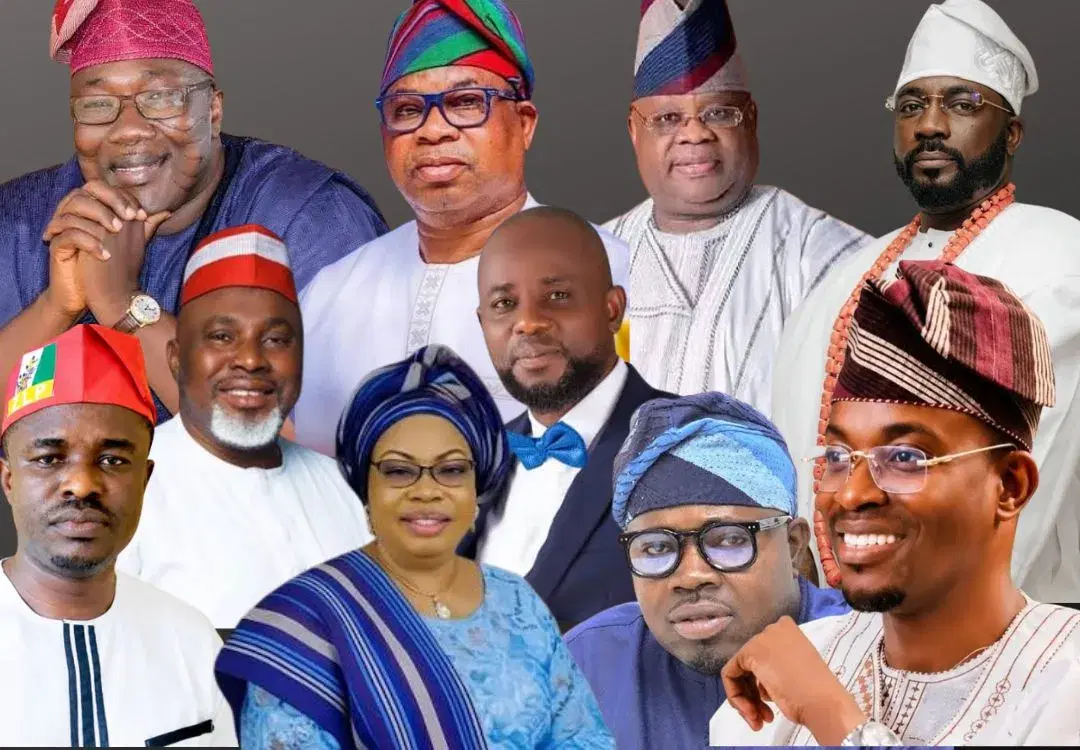
Now, on August 15, 2026, Osun votes again. The contest looks different from 2022. Adeleke left the PDP in the final months of 2025 and is seeking re-election as the candidate of the Accord Party, having emerged unopposed at the party’s primary in Osogbo in December. His strongest challengers are Bola Oyebamiji of the APC, a former Osun finance commissioner under both Aregbesola and Oyetola, and Najeem Salaam of the ADC, a former Speaker of the Osun State House of Assembly. In the campaign’s final days, the APM and PDP candidates both withdrew and endorsed Adeleke, narrowing what several news organisations have described as a three way race.
But beneath this year’s political calculations sits the older story. Osun is voting in August, months ahead of the rest of Nigeria, because its governorship calendar was already running outside the national cycle long before any of the 2026 candidates entered the race.
The wider significance of the case
The Aregbesola-Oyinlola dispute matters beyond Osun because it shows how far the consequences of election litigation can travel. An election result announced on collation night is not always the final word. In Osun’s case, the real contest continued in court for more than three years, through two tribunals and two rounds of appeal, before a winner was finally settled.
It also shows how a single judicial outcome can outlive the dispute that produced it. The Court of Appeal in 2010 was not trying to design an electoral calendar. It was answering a narrower legal question: who lawfully won the 2007 vote count once malpractice-affected results were removed. The consequence of answering that question three years late is a state that has voted for governor separately from the rest of Nigeria in every cycle since.
Conclusion: The election that never really ended
Nearly twenty years after Osun voters first went to the polls in 2007, the consequences of that election are still being felt. Oyinlola’s initial victory lasted more than three years before the judiciary overturned it. Aregbesola’s eventual victory changed not only who occupied Government House in Osogbo, but the point from which every subsequent Osun governorship cycle would be measured.
That is the paradox at the heart of Osun’s electoral history: an election held in 2007 is part of the reason an election is being held in 2026. The Court of Appeal was not trying to build an off-cycle election system. It was resolving a dispute over whether the 2007 election had produced a lawful winner. Because that dispute was not finally settled until November 2010, the political consequences reached far beyond the courtroom, into 2014, 2018, 2022, and now 2026.
When Osun voters cast their ballots tomorrow, they will not simply be choosing between candidates or parties. They will be voting inside an electoral calendar shaped by a dispute that began with a rejected result, ran through years of litigation, and ended with a judgment that changed the state’s political trajectory. Osun’s clock did not move because politicians decided to make it different. It moved because, in 2010, the courts finally settled who had won an election held three years earlier. Nearly two decades on, the hands of that clock are still moving.




 Eagle Fm