WHY ARE NIGERIA’S GREATEST STORIES NOT ON SCREEN?
Written by Oluwaseyi Amosun on September 3, 2026
By BOLARINWA BABAJIDE
Nigeria has no shortage of stories. Long before Nollywood became one of the world’s most recognisable film industries, the land now called Nigeria had already produced stories of wars, kingdoms, resistance, political struggles, remarkable women, powerful kings and men who shaped the direction of a nation. Yet despite the richness of this history, only a fraction of it has found its way into major Nigerian films.
The names are not hard to find. Queen Amina of Zazzau, a warrior queen whose reign contains leadership, ambition and the complexities of ruling in a period very different from modern Nigeria. Queen Idia of Benin. Jaja of Opobo, whose confrontation with British imperial power could carry a gripping historical drama on its own. Nana Asma’u, whose intellectual and educational legacy remains relatively unfamiliar even to Nigerians who grew up two hundred years after her. Herbert Macaulay, Nnamdi Azikiwe, Ahmadu Bello, Tafawa Balewa and Obafemi Awolowo, men whose political rivalries and contradictions would make for far richer viewing than the heroic portraits history classes tend to leave behind. Funmilayo Ransome-Kuti, an educator, nationalist and women’s rights activist whose mobilisation of women in Abeokuta is a story about courage, politics, gender and resistance built for a contemporary audience. Isaac Boro, in a country where debates about the Niger Delta, oil and resource control have never gone away. These are only a few names in a much larger archive.
Film is an art, but it is also a business, and the commercial logic explains part of the silence. A romantic drama, comedy or family story can be filmed using locations, costumes and settings that already exist. A historical epic is considerably more demanding: appropriate costumes, architecture, props, weapons, locations, production design, and researchers who can separate history from legend. All of that costs money most Nigerian productions do not have.
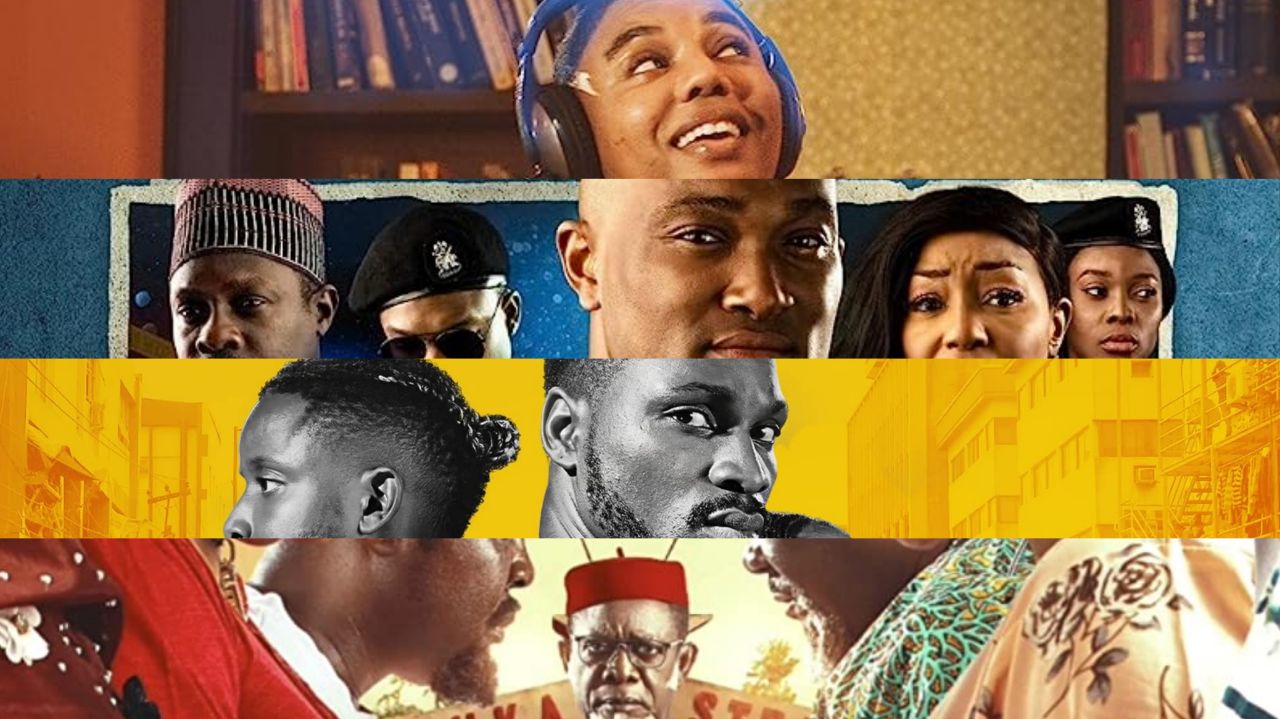
Nigerian history is also not always comfortable history. It contains political disagreements, ethnic tensions, colonial violence, military coups, a civil war whose memory Nigerians still interpret differently depending on where they stand. It is understandable that producers gravitate toward stories that carry less risk. But commercial caution should not become an excuse for historical silence, and Nollywood has already proven, more than once, that Nigerian audiences will sit through difficult history when it is told well. October 1 and Half of a Yellow Sun opened that door years ago. Since then the list has grown: Bolanle Austen-Peters gave Fela Kuti’s mother her own film in Funmilayo Ransome-Kuti, and followed it with House of Ga’a, a study of an Alaafin-era kingmaker whose ambition unravelled an empire. Niyi Akinmolayan’s two-part Lisabi told the story of the Egba farmer who rallied his people against Oyo Empire rule, in Yoruba, on Netflix, to an audience well beyond Nigeria. Kunle Afolayan has spent a decade doing similar work with Anikulapo and October 1. Elesin Oba: The King’s Horseman gave Soyinka’s play its due, and this year’s The Man Died carried his prison memoir from the Civil War onto Prime Video, shot entirely with a Nigerian crew in Lagos and Ibadan. Even Ogbori Elemosho, the 1963 epic about the founding of Ogbomoso that turned Lere Paimo into a legend, is proof this instinct did not start with streaming money. It is Nollywood’s oldest one.
These films deserve the praise they get, and they are exactly the evidence that should embolden more producers, not fewer. But a handful of titles across six decades is still a trickle against an archive this large, and Nigerian history cannot depend on the school curriculum to fill the gap. Most Nigerians will finish secondary school having memorised names and dates for an exam, not having sat with who Ahmadu Bello was as a man, what the January 1966 coup actually cost the country, or why the war that followed still shapes how regions talk about each other. If the classroom cannot make that history feel alive, the screen has to.
The Ownership Question
There is a second problem, and it is arguably more urgent than the funding gap. It is not only whether Nigeria’s stories get told. It is who gets to tell them.
The clearest recent illustration sits outside Nollywood entirely. Children of Blood and Bone, adapted from Tomi Adeyemi’s novel and built on Yoruba mythology and a fictional West African kingdom, has spent much of 2025 and 2026 at the centre of exactly this argument. Adeyemi has publicly withdrawn her support from the production over creative disagreements. The casting of Amandla Stenberg, a lighter-skinned biracial actress, in a role written as dark-skinned reopened a colorism debate the community has had before, and Stenberg’s own past comments about not wanting to play “a Black character with a Nigerian accent” while biracial made her casting in a Yoruba-rooted story feel, to many critics, like a contradiction of her own stated principle. When the first trailer landed in mid-2026, the loudest reaction online was not about the visuals but the accents: a cast drawn mostly from American, British and South African actors attempting to carry a story that Nigerian audiences, and Yoruba speakers specifically, felt entitled to hear rendered accurately.
The same argument played out with The Woman King in 2022. The film told a true story, the all-female army that defended the West African kingdom of Dahomey, now part of Benin, and was widely praised for its performances. But rather than commit to an authentic Beninese accent, the production settled for a generalised “African” accent, the kind Hollywood has used for decades to signal an entire continent without naming any of it precisely. It is a small detail on paper. In practice, it is the same flattening that turns Zazzau, Dahomey and Lagos into interchangeable backdrops for stories that are not interchangeable at all.
Nigerian filmmakers face the opposite version of the same bind. When Genevieve Nnaji’s Lionheart was disqualified from the Academy Awards’ International Feature category in 2019 for having too much English dialogue, a language Nigeria’s own colonial history made a working national tongue, it exposed how Western institutions get to define what counts as authentically African even when the story, cast and setting are entirely Nigerian. Nigerian filmmakers are asked to sound convincingly local when Hollywood tells their stories, and then told they are not local enough when they tell their own.
This is the argument for insisting that Nigeria’s stories be told from within Nigeria first. It is not a rejection of outside interest or outside money. Streaming platforms have created a genuine international market for African stories, and there is nothing wrong with a Nigerian historical epic finding an audience in London or Atlanta. The problem is a pattern in which the biggest budgets, the biggest platforms and the final creative say tend to sit outside the culture being depicted, while the people who grew up inside that culture, who know which accent belongs to which region, which detail is legend and which is record, get consulted last or not at all. A Yoruba historian understands Queen Amina’s world in ways a casting director in Los Angeles cannot. That is not sentiment. It is simply where the knowledge lives.
Making Room for Both
None of this requires Nollywood to abandon the contemporary stories that built its global reputation. It requires the industry to stop treating history as something that belongs only in classrooms, and to stop ceding its own archive to whoever is willing to spend the most money telling it.
A historical film should not feel like a two-hour history lecture. It should feel like a film. Queen Amina should not simply be a name from a textbook; audiences should see her ambitions, her fears, her political calculations. Funmilayo Ransome-Kuti should not merely be labelled an activist; audiences should understand the society she fought and what it cost her to fight it. Azikiwe, Awolowo, Ahmadu Bello and Tafawa Balewa should not be reduced to heroic portraits when their rivalries are the more honest, more watchable story. Historical filmmaking always involves interpretation, compression, dramatisation. That is acceptable. What is not acceptable is entertainment completely replacing history, a fictionalised version becoming the only version an audience ever encounters. That is precisely why filmmakers need historians, archivists and researchers inside the process, not brought in afterward to approve what has already been shot.
There is also a generational argument here. Nigeria has one of the largest young populations in the world, and many of them encounter history mainly through examinations rather than curiosity. A well-made film can make a historical figure memorable in a way a textbook rarely does. A teenager who watches a compelling film about Funmilayo Ransome-Kuti may go looking for her biography afterward. Someone who watches a film about Queen Amina may want to learn the actual history of Zazzau. Cinema can be both entertainment and a gateway to historical education, but only if the version put on screen is one Nigerians recognise as theirs.
History already contains everything a filmmaker spends millions of naira trying to invent: conflict, ambition, love, betrayal, sacrifice, victory and defeat. Nigeria’s greatest problem is not a shortage of stories. It is a failure, so far, to insist that those stories be told on Nigeria’s own terms, by the people who already understand them, before anyone else gets the chance to tell them for us.
They are in the archives. They are in history books, in museums, in family memory and oral tradition. They are waiting. The question is whether Nollywood, and not Hollywood, is the one that brings them to life.




 Eagle Fm