AFAN MARKS WORLD FOOD DAY IN IJEBU LAND, HIGHLIGHTS FARMING INNOVATION, GOVERNMENT SUPPORT AND FOOD AFFORDABILITY
Written by Oluwaseyi Amosun on October 23, 2026
BY: Oluwajoba, Oluwafemi and Daniella
The All Farmers Association of Nigeria (AFAN), Ijebu Land, has called for greater government support for farmers, improved farming methods and better access to agricultural resources as it celebrated the 2026 World Food Day in Ijebu-Ode, Ogun State.
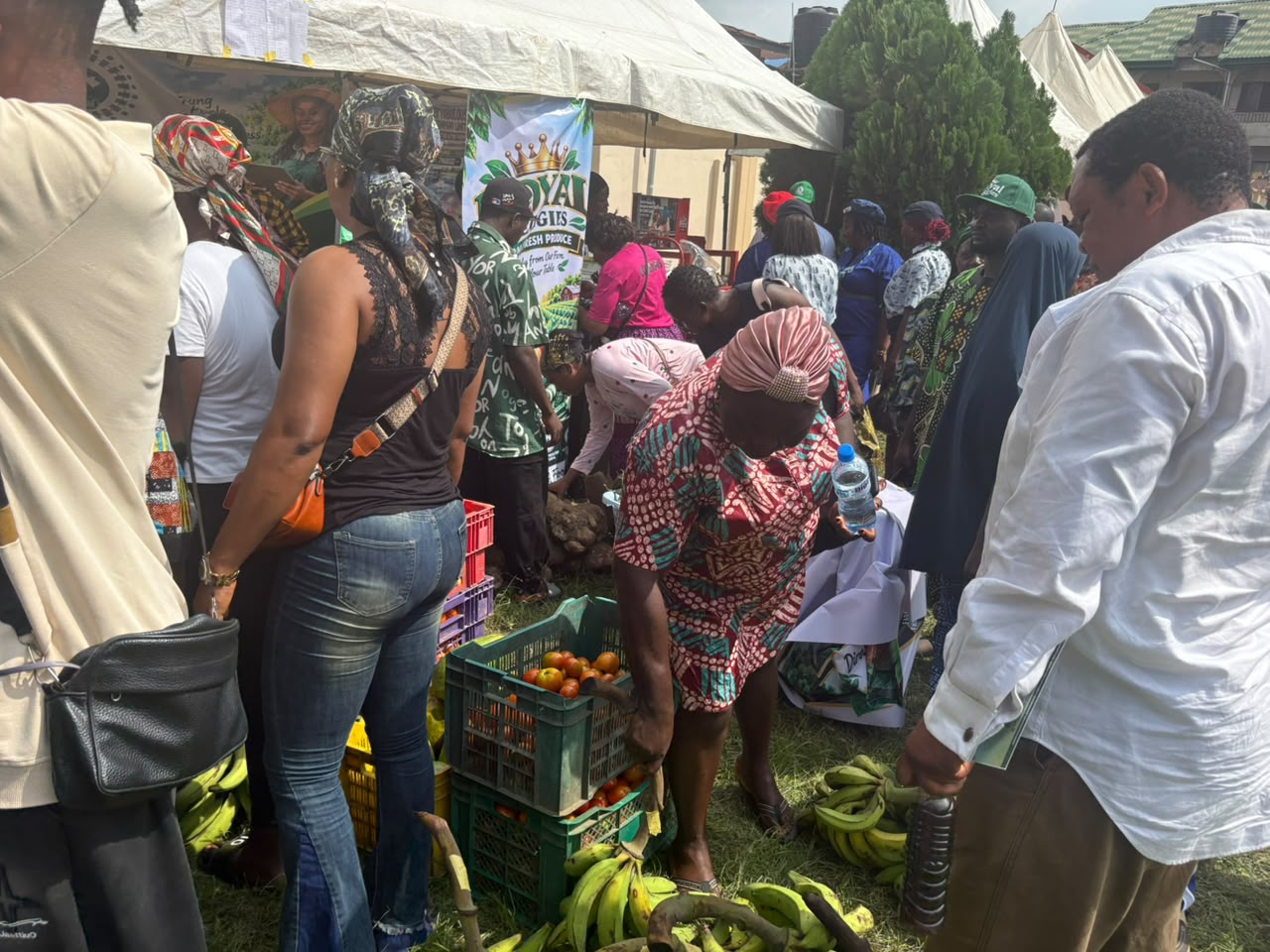
The event, held on Thursday, October 22, 2026, at the Awujale Palace Extension, Ojude Oba Pavilion, Ijebu-Ode, was organised under the theme, “Innovate Today, Nourish Ijebuland Tomorrow.” It brought together farmers, agricultural stakeholders and members of the public to discuss agricultural innovation, food security and the challenges facing food production and affordability.
The Special Assistant to the Ogun State Governor on Agriculture, Dr. Angel Adelaja Kuye, said the state government had prioritised inclusive support for farmers, particularly those operating at the grassroots. She explained that the government’s approach extended beyond large-scale and agro-allied businesses to farmers working through associations such as AFAN.
“One thing I can say as we celebrate African farmers today for World Food Day, we’re ensuring the farmers are in good hands,” Kuye said, adding that Governor Dapo Abiodun had prioritised inclusive development and support for farmers across the state.
She said the government had worked to equip farmers with relevant skills, connect them to markets and improve their access to investment and finance. According to her, “We have done enough to invest in and bring investments into the state that benefit the small holder farmers.” She added that access to finance had traditionally been a barrier for farmers, noting, “We have provided grants and financial support to farmers across the state in various sub-sectors.”
Kuye also highlighted the establishment of shared processing facilities to enable farmers to add value to their produce instead of selling it at low prices. She explained that the facilities covered poultry, cassava and fish processing, allowing farmers to take a more active role in processing their products.
“But through our processing facilities, farmers in Ogun State have been able to be the processor themselves,” she said, adding that the facilities had been handed over to farmers in different communities. She stressed the importance of ownership and value addition, saying, “So instead of just selling your products at a low price, you can process them and make sure that you get more money from what you have invested.”
On climate-smart agriculture and the use of technology, Kuye said the state had strengthened extension support services and equipped extension officers to help farmers access weather information. “Our extension officers are well equipped. We have made sure that farmers have smartphones to be able to get weather forecasts from our extension officers,” she said.
She also explained that the Farmers Information Management System helped the government coordinate agricultural support and identify farmers’ needs. According to Kuye, “It not only has a database of the farmers in Ogun State, it knows where they are, it knows what they are planting.” She said the system also helped ensure that information about interventions and support reached farmers.
Kuye further listed free fertilizer, free and subsidized agricultural inputs, mechanization services and seedlings among the support provided to farmers. She said the distribution of cocoa and other tree-crop seedlings encouraged farmers to intercrop and benefit from longer-term agricultural investments. She added that the government had also made efforts to ease transportation for farmers and provide opportunities for small holder farmers to access export markets.
Speaking on export opportunities, Kuye explained that training and cooperation could help small holder farmers overcome the difficulties of exporting individually. “Because trainings on export readiness and making sure that small holder farmers work through their cooperatives to ensure that they can export together,” she said. She illustrated the importance of farmers’ collective action, adding, “But when he works with his cluster, and when he works with the cooperative, they come together, they’re able to do it.”
She commended farmers for their contribution to food security and said they had taken advantage of opportunities provided by the state government. “And we’re happy and we appreciate them today, for their own part of the collaboration that we have had for food security. They have done well for us,” she said.
The AFAN Ogun State Chairman, Alhaja Ganiyat Ibilola Adeoye Kushimo, said farmers had benefited from agricultural support, including seeds, fertilizer and other inputs. She expressed hope that continued assistance would help farmers improve production and make farming activities more productive.
Speaking about the equipment available to farmers, Kushimo said, “From February this year, including the 16th of this month, we have 40 tractors to work with. Tricycles, we cannot count that one. It is more than 100 to take to the farm.” She said the support had contributed to improvements in farming, adding, “It really increased, unlike before, and now they are proud to say that they can go to farm and harvest well.”
Kushimo also expressed hope that continued provision of agricultural inputs would help farmers increase their output and contribute to food security.
The AFAN Ijebu Land Chairman, Alhaji Niyi Atoromola, said the theme, “Innovate Today, Nourish Ijebuland Tomorrow,” highlighted the need to adopt improved farming practices today to ensure sufficient food production in the future. He called for a transition from traditional farming methods to commercial agriculture, with greater use of modern equipment and improved crop varieties.
“To innovate several methods of farming today, shift from local farming into commercialised farming, to use modern implements, use improved varieties. When you start using that then the future is assured,” Atoromola said.
However, he stressed that farmers could not address the challenges confronting the agricultural sector without adequate support. “There’s little the farmers can do on their own, and that’s the problem,” he said, urging the government to pay greater attention to farmers’ needs.
“Government needs to look at the side of the farmers,” Atoromola added, noting that farmers played an important role in feeding the nation and providing employment.
The Chief Executive Officer of D.SAM & CO. International Resources Services, Adesanyan Oladimeji Samson, highlighted the importance of adding value to agricultural production. He explained that his business had an agricultural division and dealt in different chicken products.
Samson said the World Food Day gathering provided an opportunity for people from different areas of agriculture to come together and discuss how to improve the sector. He emphasised the need to add value to farm produce and contribute to economic growth, describing the theme as a call to prepare for the future through innovation.
For members of the public, food affordability remained a major concern. Mrs. Lateef Adenike, who attended the event, welcomed the initiative and urged the organisers to continue holding similar programmes while addressing the high cost of food.
“It’s good if they can keep repeating the event and they should reduce the price of goods,” Adenike said.
She explained that although she had bought yam at the event, she hoped food prices would become more affordable, including the prices of potatoes and other staples. She also prayed for the continued prosperity of the event’s sponsors.
The celebration highlighted the importance of agricultural innovation and collaboration while drawing attention to farmers’ calls for stronger government support and the public’s concern about the cost of food.






 Eagle Fm