2026 Budget Twist: MDAs Inject N3.5tn New Projects Despite FG Freeze
Written by Oluwaseyi Amosun on January 12, 2026

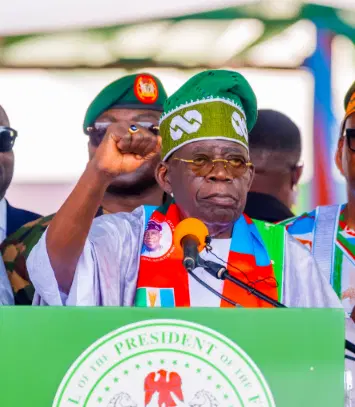
President Bola Tinubu during the presentation of the 2026 Appropriation Bill to the National Assembly… Photo Credit: X | Bayo Onanuga
N3.5tn worth of new projects has been inserted into the proposed 2026 federal budget despite a Federal Government directive barring ministries, departments and agencies from introducing fresh capital items, according to an analysis of the appropriation bill.
Figures from the 2026 Appropriation Bill indicate that new project entries across MDAs amount to N844.49bn, while the total rises to N3.5tn when Service-Wide Votes are included. This represents about 15.09 per cent of the proposed N23.21tn capital expenditure for 2026.
The development runs contrary to the 2026 Abridged Budget Call Circular issued by the Ministry of Budget and Economic Planning, which instructed MDAs to roll over 70 per cent of their 2025 capital allocation into 2026 and focus on completing ongoing projects amid revenue pressures.
The circular directed that all rollover allocations must align with national priorities, including security, the economy, education, health, agriculture, infrastructure, power and energy, as well as social safety nets, women and youth empowerment. It warned that new projects would be subjected to strict scrutiny to ensure value for money.
However, observations show that at least 82 MDAs have fresh capital or programme items in the proposed budget, with over 400 new project lines ranging from large-scale infrastructure and health investments to constituency-level interventions such as boreholes, training schemes and equipment supplies.
A significant portion of the new project portfolio sits under Service-Wide Votes, which account for N2.66tn of the N3.5tn total. The largest single allocation is N1.7tn for outstanding contractors’ liabilities from 2024, representing about 48.55 per cent of all new projects.
Other major service-wide vote entries include three N100bn allocations for the Nigeria Development Finance Corporation, the Economic Transformation Finance Programme and the Nigeria Growth Investment Fund, as well as N283.85bn for presidential air fleet logistics and management, including the operation of the National Forest Guard.
Additional allocations include N110.31bn for the Nigerian Air Force to settle obligations on six T-129 ATAK helicopters and three Mi-35 helicopters, N30bn for DSS special operations, N20bn for INFRACO capitalisation, and take-off grants for newly created MDAs.
At the MDA level, the Budget Office of the Federation has the highest new project allocation at N375bn for additional financing under the Power Sector Recovery Operation through multilateral or bilateral tied loans. This alone accounts for 44.41 per cent of total MDA-level new projects.
The Federal Ministry of Transport follows with N210.53bn for consultancy services on railway projects and the construction of bus terminals across the six geopolitical zones. The National Library of Nigeria has N24bn earmarked for structural renovation and space upgrades nationwide, while the National Blood Service Commission has N15bn for blood service infrastructure in Abuja and state offices.
The Sokoto Rima River Basin Development Authority also features prominently with N9.14bn for solar projects, rural roads, irrigation equipment and water supply schemes across its catchment areas.
Beyond these, several teaching hospitals and health institutions received new project allocations ranging between N5bn and N6.22bn. Vehicle purchases account for N5.85bn, while furnishing, office equipment, renovation and staff accommodation projects collectively run into tens of billions of naira.
This is not the first time MDAs have defied budgetary restrictions. In December 2024, the Federal Government similarly barred new projects in the 2025 budget unless tied to the completion of ongoing initiatives, a directive that analysts say was also widely ignored.
The National President of the Nigerian Economic Society, Prof. Adeola Adenikinju, blamed late budget submissions for poor scrutiny by the National Assembly, warning that rushed approvals undermine fiscal discipline.
A development economist and Chief Executive of CSA Advisory, Dr Aliyu Ilias, described the situation as a reflection of persistent fiscal indiscipline, accusing both the executive and the legislature of failing to enforce budget rules and oversight.


 Eagle Fm