2027: LP CHIEFTAIN ARABAMBI BACKS TINUBU FOR SECOND TERM, SAYS PRESIDENT MUST COMPLETE ECONOMIC REFORMS
Written by Oluwaseyi Amosun on July 14, 2026
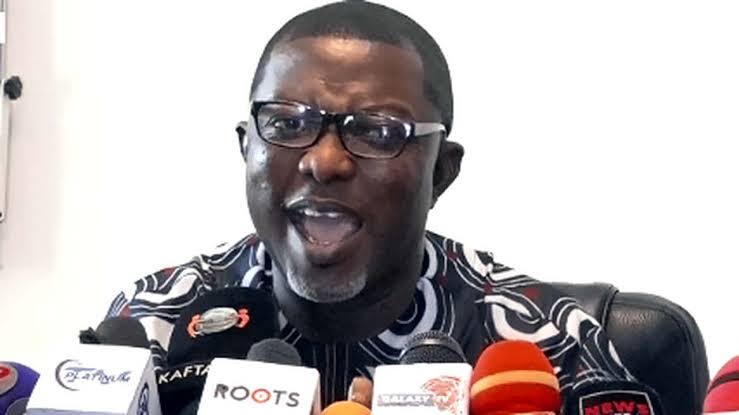
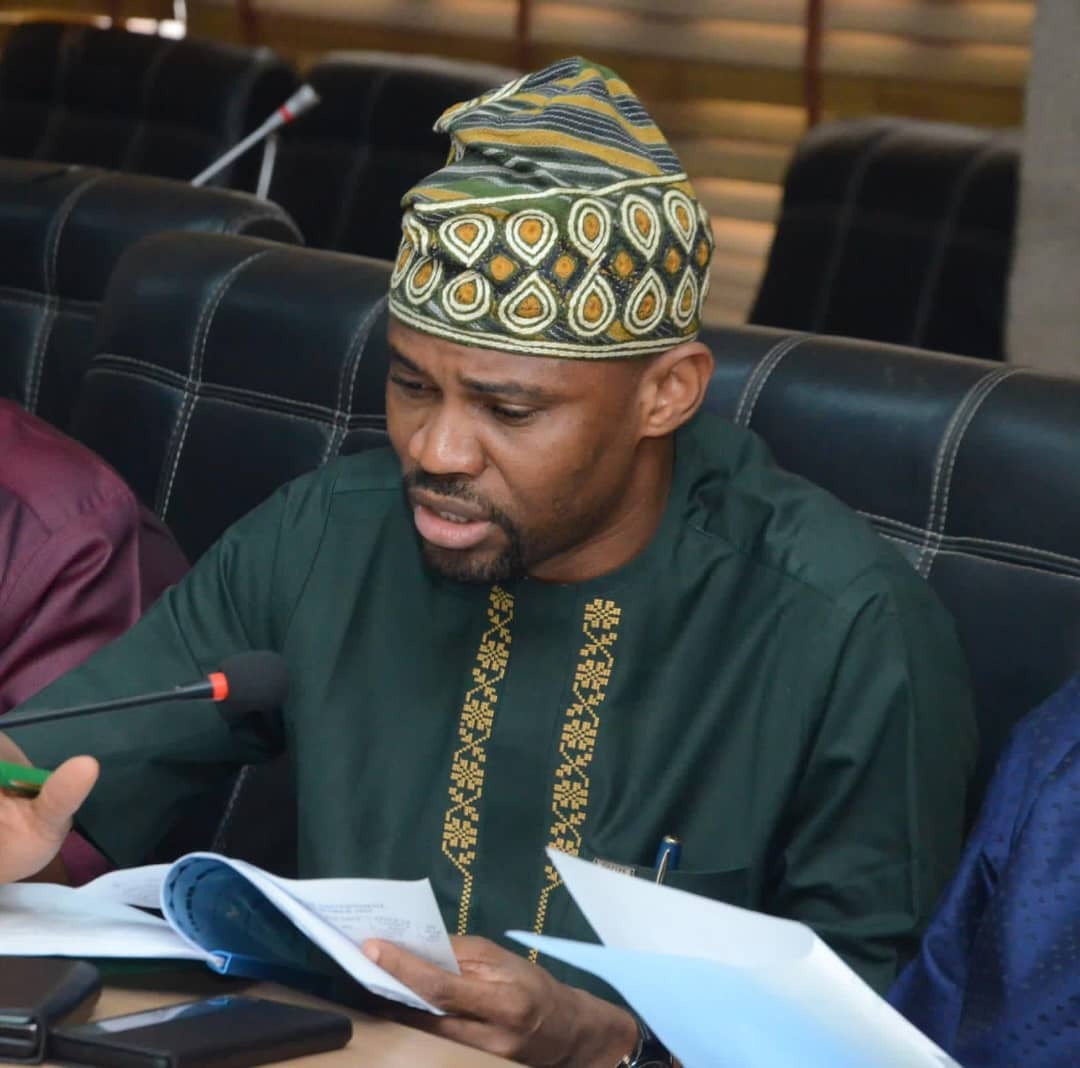
Com Abayomi Arabambi
The National Vice Chairman of the Labour Party (LP) in the South-West, Comrade Abayomi Arabambi, has declared his support for President Bola Ahmed Tinubu’s re-election in 2027, saying the President deserves another four years to consolidate ongoing economic reforms and complete what he described as the task of rebuilding Nigeria’s economy.
He maintained that despite criticisms trailing the administration, the current government has recorded significant achievements that should not be abandoned midway. Arabambi said continuity, rather than a change in leadership, would better serve the country’s long-term economic interests.
Speaking on Monday during an exclusive interview on Frontline, a current affairs programme on Eagle 102.5, Ilese Ijebu, Ogun State, Arabambi said his support for Tinubu was based on what he described as measurable improvements in governance and economic management rather than political patronage. He argued that the President inherited enormous economic challenges and had taken difficult but necessary decisions to reposition the country. According to him, those reforms require time to produce their full impact.
Arabambi dismissed concerns over President Tinubu’s decision to retain Vice President Kashim Shettima as his running mate for the 2027 presidential election, insisting that competence should take precedence over religious considerations. He argued that the renewed debate over the APC’s Muslim-Muslim ticket was unnecessary and should not overshadow governance issues. He maintained that the administration should instead be assessed by its performance over the last three years.
He said, “Well, as far as I’m concerned, I don’t see any issue in that. It’s just as clear as snow, as bright as snow, you know, and as clear as air, that the President will soon form his vice-presidential candidacy.”
Arabambi argued that political realities in Northern Nigeria made the choice understandable, adding that religion should not dominate conversations ahead of the 2027 elections. According to him, the demographic composition of the North cannot be ignored when major political decisions are being taken. He maintained that President Tinubu merely acted in line with those realities.
He stated, “If you even go to say, oh, I want to pick a northerner Christian they will tell you they’re a minority. And that’s a fact. So the President will not just want to go against the wind.”
The Labour Party chieftain also rejected suggestions that the Muslim-Muslim ticket disadvantaged Christians, arguing that insecurity affects Nigerians regardless of religious affiliation. He said victims of kidnapping and banditry come from all faiths and should not be used to fuel religious divisions. He therefore urged politicians to avoid exploiting religion for political purposes.
According to him, “The banditry in Nigeria, as they are killing Muslims they are killing Christians also. So it’s not a question of the Muslim-Muslim ticket has any positive effect or mostly negative effects, you know, on the Christians.”
Arabambi further argued that the Tinubu administration should be judged on the basis of economic reforms and governance outcomes rather than religious sentiments. He pointed to changes in Nigeria’s foreign exchange regime and the downstream petroleum sector as examples of progress under the current administration. He maintained that difficult reforms often require time before their benefits become evident.
He said, “The government has performed well, you know, on the economy, you know, we now have a unified exchange rate, you know, in Nigeria.”
The LP chieftain also cited improvements in fuel supply, saying Nigerians no longer experience the long queues that once characterised petrol distribution across the country. He described the development as one of the visible outcomes of the administration’s policies. He added that such achievements should be acknowledged regardless of political affiliation.
He said, “Whether we like it or not, we don’t queue, you know, to buy our fuel.”
Arabambi further credited the Tinubu administration with improving the country’s fiscal position, arguing that the President inherited a difficult debt profile from the previous administration. He maintained that reforms undertaken by the current government have helped reposition public finance. He urged Nigerians to judge the administration within the context of those inherited challenges.
According to him, “Debt servicing a revenue ratio, you know, actually from 97, you know, the way Buhari left it, because don’t forget, the former president was servicing our debt to a ratio of 97% from our earnings.”
On appointments, Arabambi dismissed allegations that President Tinubu had favoured a particular region or religion, insisting that appointments should primarily reflect competence. He argued that the Constitution empowers the President to choose those he believes can deliver results. He maintained that merit should remain the guiding principle.
He said, “The power to appoint minister rests with the president… I think the president will consider that based on merit. I get it, based on merit.”
Arabambi also defended the composition of the Federal Executive Council, saying it reflects national balance and inclusiveness. He argued that no region had been deliberately excluded from governance. According to him, appointments should not merely satisfy ethnic or regional sentiments.
He stated, “When you look at the composition of the Federal Executive Council, you know, it’s balanced… You have to give the best, you know, to our country.”
The Labour Party leader further pointed to the establishment of regional development commissions across the country’s six geopolitical zones as evidence of equitable governance. He said each region now has a dedicated platform to pursue its developmental priorities. He maintained that the initiative demonstrated fairness on the part of the President.
He said, “President Bola Tinubu successfully established a regional development commission… There is no region that will not come and convene their own.”
Arabambi argued that each commission has been given equal opportunity to drive development in its respective region. According to him, no part of the country can legitimately claim exclusion from the initiative. He urged Nigerians to judge the commissions by how effectively they utilise the opportunities before them.
He added, “Everybody has their own now. So, that will show you he has the love of Nigeria, you know, attached and we should give it to him.”
He also praised the administration for clearing outstanding international financial obligations and sustaining salary payments despite economic pressures. According to him, these developments demonstrate responsible economic management. He maintained that such reforms should be allowed to mature.
Arabambi said, “The president successfully also cleared, you know, the seven billion backlog of international trade… We also need to celebrate ability to pay salary.”
Declaring his political preference ahead of the 2027 election, Arabambi said he had no reservations about openly backing President Tinubu’s re-election bid. He said he expected criticism from supporters of opposition parties but remained unmoved. According to him, his position was informed by conviction rather than political patronage.
He said, “Mine is Tinubu, for second time. Anybody that doesn’t like him, when they see me, they should not greet me. I don’t care.”
Arabambi also turned his criticism toward what he described as Obi’s long history of moving between political parties, arguing that a candidate who has passed through APGA, PDP, the Labour Party, ADC and now the NDC has shown a pattern of instability that makes him unfit to lead the country. He said Obi’s habit was to attach himself to a party, cause disruption, and leave once his ambitions were no longer accommodated, likening each party to a different kind of vehicle Obi had ridden and abandoned in turn. He argued that this repeated pattern, rather than reflecting political independence, exposed a deeper unreliability that Nigerians should weigh heavily before considering him for the presidency.
He said, “When Obi came, he left something I would call a motorcycle of APGA. He said, if something is not good, he is not going to take it to his designation. He fought Ojukwu, he fought their National Chairman, Victor Umeh, who is now frolicking with him all around now… He left and joined PDP. At least, we can describe PDP as a Jeep. People came to join us now, Labour Party. A party like an aircraft, you know, that brought everybody on board, you know, we moved with the speed of light, you know, to garner supporters. He still alighted and said, no, he is not going. He went to ADC. ADC, Coalition, something we call, you know, most of the Atikulated vehicle. Well, in here now, which vehicle has he joined now? Korope. And by so far now, he went ahead. He took the key, he saw a train coming, he now drove the Korope to go and hit the train… Obi is synonymous with crisis. Obi is synonymous with, you know, how many party Obi has joined, ever since he has promised never to leave APGA. Ever since he has promised that he will die in APGA, he will never leave APGA. He has been putting one problem on the other, on every party. He will leave places of war. He will leave places of, you know, discontentment. Places of crisis, Obi will leave it there.”
Arabambi also dismissed suggestions that his support for the President was motivated by personal benefits or political sponsorship. He insisted that he had never met President Tinubu personally and had no relationship with him beyond sharing the same church denomination as the First Lady. He argued that his endorsement was based solely on his assessment of the administration’s performance.
He stated, “They will be calling me a man of names ‘sponsored by Tinubu’. That is their business… I have never even met him. I belong to the same church as the First Lady. Nothing more.”
The Labour Party chieftain concluded that President Tinubu should be allowed to complete the reforms already underway rather than hand them over to another administration. He warned against abandoning ongoing policies midway through implementation, saying continuity remained essential for economic stability. He maintained that his support for Tinubu’s second-term bid would remain unchanged as the 2027 election approaches.


 Eagle Fm