FAKE AGENCY: HOUSE HAS RIGHT TO PROBE PFIPC CASE, MAY EXPOSE BIGGER CORRUPTION — OWOEYE, AYANGA
Written by Oluwaseyi Amosun on July 30, 2026
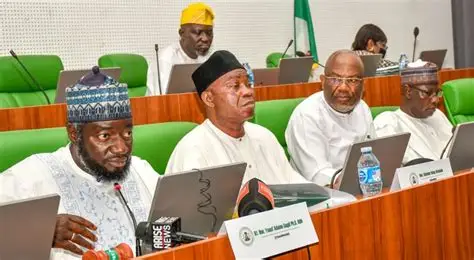
A legal practitioner, Esquire Durotimi Owoeye, and public affairs analyst, Bayo Ayanga, have defended the House of Representatives’ ongoing investigation into the alleged activities of the Presidential Foreign Investment Promotion Council (PFIPC), arguing that the National Assembly possesses the constitutional authority to conduct the probe despite pending criminal proceedings, while maintaining that the exercise could expose a broader network of individuals allegedly linked to the controversial agency.
The analysts made the remarks while discussing the House of Representatives’ order directing the Inspector-General of Police to produce the self-acclaimed Director-General of the Presidential Foreign Investment Promotion Council (PFIPC), Prince Adeyemi Adeniyi, before its ad hoc committee investigating the controversy surrounding the alleged phantom agency.
The development follows the House committee’s decision to continue its inquiry into the alleged operations of the Presidential Foreign Investment Promotion Council, despite the Presidency distancing itself from the agency and the matter already being the subject of criminal prosecution.
Speaking during an interview on Frontline, a current affairs programme on Eagle 102.5 FM, Ilese-Ijebu, Ogun State, Owoeye dismissed suggestions that the doctrine of sub judice should prevent lawmakers from investigating the controversy, insisting that the powers conferred on the National Assembly under the 1999 Constitution are clear and unambiguous.
According to the legal practitioner, the legislature’s investigative authority is expressly provided under Sections 88 and 89 of the Constitution, empowering both chambers of the National Assembly to investigate matters within their legislative competence, especially those relating to public expenditure, appropriation and the exposure of corruption.
“By virtue of section 88 of the 1999 constitution, they can actually conduct an investigation of this nature through a committee,” Owoeye stated.
Explaining further, he noted that the Constitution empowers lawmakers to investigate any matter connected with legislation and the administration of funds appropriated by the National Assembly, stressing that one of the principal objectives of such investigations is to expose corruption, inefficiency and waste in the administration of public resources.
Owoeye argued that the existence of criminal proceedings before a court does not automatically strip the legislature of its oversight responsibilities.
“In my own personal view, I feel the House of Reps has the power, despite the fact that this matter is the subject of criminal prosecution. The House of Reps can exercise judicial power in investigating this matter. Maybe we can call it a parallel investigation,” he stated.
While acknowledging that the judiciary retains exclusive powers to determine criminal liability, Owoeye maintained that legislative investigations and judicial proceedings can run concurrently without creating constitutional conflict, provided each institution operates within its legally assigned responsibilities.
He explained that the legislature’s assignment is not to pronounce guilt or innocence but to determine how a body described as unestablished allegedly secured public funds through the national appropriation process and to identify possible weaknesses within government institutions that made such an occurrence possible.
According to him, one of the major issues deserving legislative scrutiny is the appropriation of funds to an agency that government authorities have publicly denied establishing.
Referring to Section 88 of the Constitution, he argued that the House is duty-bound to expose corruption or waste connected with funds appropriated by the National Assembly.
“This Same house of reps and the Senate sat and discussed and appropriated funds to this unestablished Presidential Foreign Investment Promotion Council. So, that is the problem. They actually sat to appropriate funds to the non-existent agency. So, they want to unravel the circumstances surrounding it to avert a future occurrence,” he said.
Owoeye also dismissed claims that the House should suspend its activities because the police are already investigating the allegations rather, he argued that lawmakers possess constitutional powers to summon witnesses, obtain documentary evidence and compel attendance where necessary, adding that the Constitution equally mandates the Nigeria Police Force to execute warrants or summons issued by the National Assembly.
He said the committee’s findings would eventually be presented before the House for consideration, after which recommendations could be adopted, legislative gaps addressed, and any criminal findings transmitted to relevant law enforcement agencies for prosecution.
Beyond the constitutional arguments, Ayanga also contended that the House investigation offers an opportunity to uncover a much wider web of alleged collaborators behind the PFIPC controversy.
According to him, the investigation should not be viewed merely as an inquiry into the activities of Prince Adeyemi Adeniyi but as an exercise capable of exposing systemic failures and individuals who may have facilitated the alleged operations of the organisation.
“I think the House of Reps have the power, they can invite anybody to give evidence towards the exposure of corruption and the deterrent for further cases like that never to happen,” Ayanga stated.
He further argued that Prince Adeniyi may be more forthcoming before lawmakers than during police interrogation, suggesting that the legislative hearing could reveal information that may otherwise remain hidden.
“That man is most likely to spill all the beans when he’s with the members of the House of Reps conducting the investigation than many things that you may think that the police will have,” he said.
Ayanga further criticised the manner of Adeniyi’s arrest by the police, arguing that although the suspect remains presumed innocent until proven guilty, legislative proceedings may provide a better platform for establishing the facts surrounding the allegations.
The public affairs analyst also rejected suggestions that the House investigation amounts to an attempt by lawmakers to shield themselves from criticism over the inclusion of funds for the alleged agency in the national budget.
Instead, he said the decision to investigate the matter demonstrates a willingness by the House to scrutinise its own processes.
” We should actually commend the House of Reps for taking this bold step to unravel this because one of the hardest things to do is to try to set up something that’s going to indict you,” Ayanga stated.
According to him, the investigative panel has already extracted useful information from several government institutions, including the Office of the Accountant-General of the Federation, the Central Bank of Nigeria and the Office of the Head of the Civil Service of the Federation, which may not have become public without the legislative inquiry.
He argued that compelling Prince Adeniyi to appear before the committee could further clarify how the alleged phantom agency operated and who may have collaborated in its activities.
On the Senate’s earlier decision not to conduct its own investigation, citing the doctrine of sub judice and the President’s directive to the Independent Corrupt Practices and Other Related Offences Commission to investigate the matter, Owoeye described the position as unconvincing.
He added that, in his opinion, the House of Representatives had shown greater independence by pursuing the investigation despite the legal and political sensitivities surrounding the case.
Owoeye further noted that similar investigations into alleged phantom government entities had occurred in established democracies, including the United States and Germany, arguing that legislative inquiries have historically played significant roles in identifying collaborators, closing institutional loopholes and strengthening accountability mechanisms.
“The existence of an alleged phantom agency is not limited to Nigeria. America, the United States of America, Germany, and some other top democracies have also experienced this at one time or the other and what they did to stop those kinds of things is what the House of Reps is doing now. To unravel, to know what actually happened, to know those within government that collaborated”


 Eagle Fm