FUEL SUBSIDY: EAGLE FM’S FRONTLINE CALLERS DEMAND CLARITY FROM ATIKU ON SUBSIDY RESTORATION, ALLIANCES AND ECONOMIC PLAN
Written by Oluwaseyi Amosun on August 24, 2026
As the debate over fuel subsidy removal intensifies between the opposition African Democratic Congress (ADC) and the Bola Ahmed Tinubu-led Federal Government, callers on Monday challenged the presidential campaign of former Vice President Atiku Abubakar to provide clearer explanations of its economic proposals and opposition strategy ahead of the 2027 election.
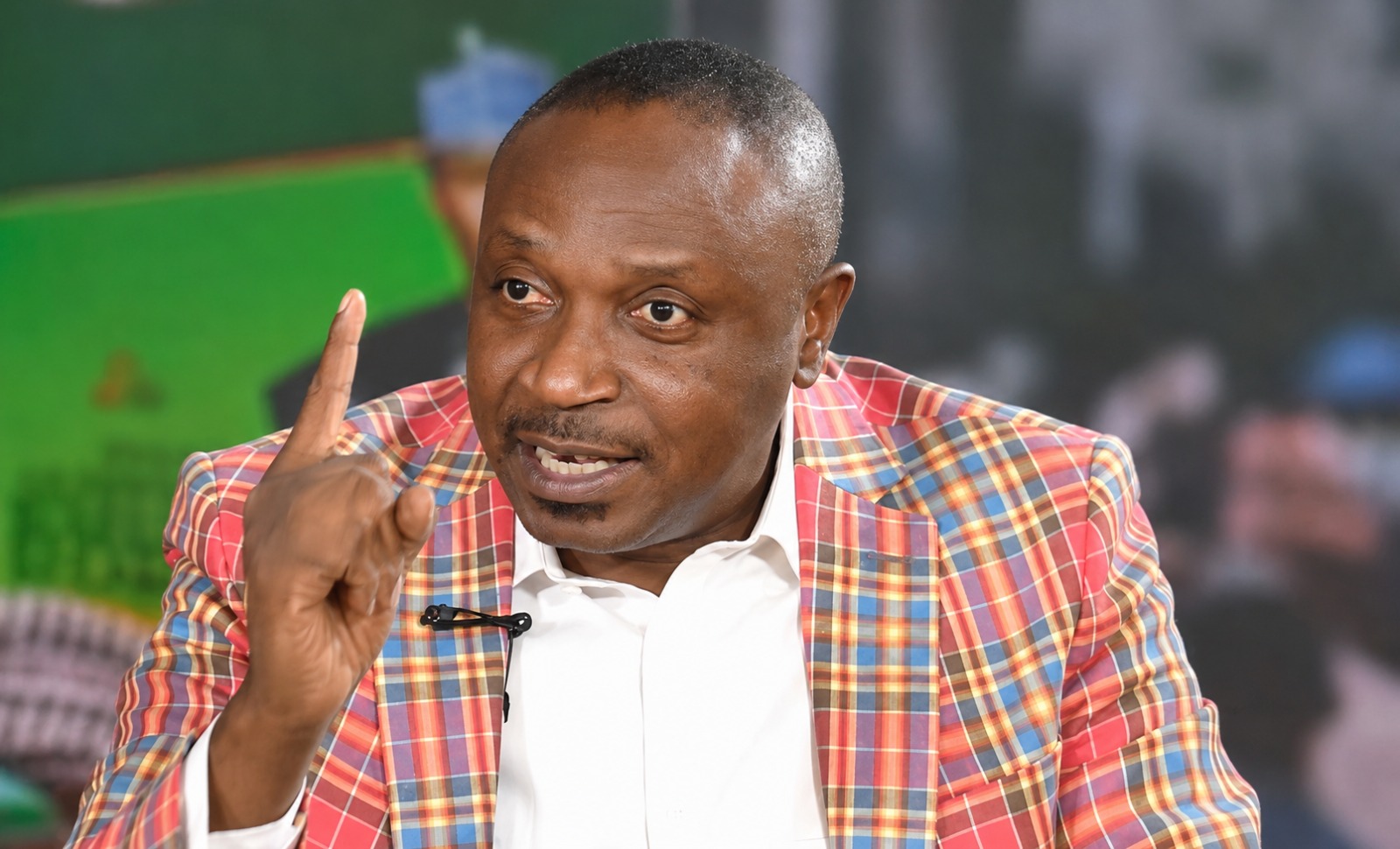
The callers made the demand during an exclusive interview with Atiku’s Senior Special Assistant on Public Communication, Phrank Shaibu, on Frontline, a current affairs programme on Eagle 102.5 FM, Ilese-Ijebu.
Recall that Former Vice President Atiku Abubakar had laid out the petroleum component of his 2027 presidential campaign programme, proposing a production subsidy to replace what he described as an opaque import-based system, while also demanding that President Bola Tinubu publicly account for petroleum-related costs recorded in government books after the 2023 subsidy removal.
Under the Atiku Economic Recovery Plan (AERP), qualifying public and private Nigerian refineries would receive domestic crude at a preferential price, but only under strict conditions tied to production output, efficiency and domestic supply. Atiku described the core logic as straightforward: “The subsidy will follow the barrel.”
Refineries that receive subsidised crude would be required to supply an independently verified quantity of petroleum products to the Nigerian market at prices that reflect the benefit of the preferential crude cost.
Meanwhile, the presidency including the Minister of Information, Mohammed Idris, has rejected calls to restore petrol subsidy, warning that the move would reverse Nigeria’s economic gains and worsen pressure on public finances.
In an Op-Ed, Idris said subsidy removal freed N15.8 trillion for the Federation between June 2023 and December 2025, with funds shared among the Federal Government, states and local governments.
While Shaibu spent much of the interview defending Atiku’s proposed return of fuel subsidy, several callers questioned the feasibility, structure and beneficiaries of the proposed policy.
A caller identified as AB from Epe questioned whether restoring subsidy could reopen the door to the abuses associated with the former subsidy regime. AB argued that the problem was not necessarily the removal of subsidy but how subsidy had previously been administered. He asked whether Atiku’s proposal would effectively return subsidy funds to independent oil marketers.
The caller’s concern was that some marketers had allegedly benefited from the previous system without delivering the expected value.
Shaibu however responded that the proposed Atiku model would be fundamentally different. He explained that support would be tied directly to crude supplied to qualifying domestic refineries.
According to him, the model would require the crude supplied and the resulting petroleum products to be monitored.
“Under the article’s proposal, the subsidy follows the barrel, not the marketer,” Shaibu said.
“With every barrel tracked and the benefit required to reflect in the pump price,” he added.
Another caller identified as Omooba rejected Atiku’s proposal to restore fuel subsidy, describing the subsidy regime as fraudulent and arguing that the focus should instead be on improving domestic refining capacity and providing basic public services.
“There’s nothing like subsidy. It’s all fraud… In fact, I love all the adjectives that Mr. Phrank has been using about our president. President is a human being like me and you. When you respect somebody too much, he misbehaves.
“You only respect somebody that respects you. It’s not that we don’t like him. But it is a mess in what we can call power abuse”
“There’s supposed to be free health, free education. The man is embarking on a journey of… unsuccessful projects. So to me, subsidy is a fraud. Atiku should not say he want to bring subsidy back, what he should do for the people is to make sure we have refineries,” he suggested.
Meanwhile, Emmanuel from Epe also commended Shaibu’s performance but urged the Atiku campaign to focus more on its policy proposals and provide greater clarity on what it intends to do for Nigerians, rather than concentrating on attacks against the Tinubu administration.
Emmanuel also questioned how potential alliances involving the African Democratic Congress would affect candidates contesting legislative seats, particularly where opposition parties agree to support one another at the presidential level.
“I want to commend Mr. Phrank. However, I want to tell them that their campaign media team should focus more on what they are going to do for Nigerians, clarity and so on, less attack.”
He also cautioned the campaign against allowing its interactions with journalists to become confrontational, saying such exchanges could make it difficult for audiences to distinguish between the interviewer and interviewee.
“And again, their interaction with the journalists should not be like that of Daniel Bwala and Isaac Brown some few months ago, that we don’t know the interviewer and the interviewee.”
A caller identified as Taiwo from Ijebu-Ife questioned Atiku’s proposal to reintroduce a subsidy, arguing that the campaign should first explain the benefits Nigerians have received from previous government support for the Dangote Refinery.
“Atiku is promising to subsidize everything. Is Atiku aware that Buhari subsidized Dangote when he was building his refineries?”
Taiwo questioned whether that earlier intervention had delivered sufficient benefits to Nigerians and urged Atiku’s campaign to address the issue before proceeding with another subsidy programme.
“And what is he looking for? What has Nigeria benefited from that subsidy? Before Atiku goes ahead to start subsidizing now.”
Also Ojikutu Hakim from Epe, questioned the propriety of having a Nigerian president allegedly linked to a drug-related investigation, urging the United States to release relevant records so Nigerians can make informed decisions ahead of the 2027 election.
“Does it even hover well for somebody who is the president of a particular country to even be alleged of something related to drug Barron? Does it even hover well for somebody who is the president of a particular country to have that kind of record?”
Hakim also appealed for the records to be made public, saying Nigerians were already facing serious challenges and deserved to know more about the allegations before deciding who to support in 2027.
“Nigerians are using this opportunity to appeal to the American concerning that investigation that they should expose him. We are already in danger so that we will know who to vote for and the kind of leaders to be voted for in the year 2027.”
Beyond the controversy surrounding the alleged records, Hakim urged the Atiku campaign to include specific measures addressing basic needs in its manifesto.
Meanwhile, responding to the callers, the SSA to the former vice president said the Atiku campaign’s proposed subsidy would be fundamentally different from previous subsidy arrangements because it would be tied to domestic production rather than payments to oil marketers.
He said the intervention by the Muhammadu Buhari administration for the Dangote Refinery occurred when fuel subsidy was still in place, arguing that the current proposal was designed to support a broader network of domestic refineries and increase local production.
“First off, at the time the concession was given by President Muhammadu Buhari, subsidy was in place. This man came to power and he said in three words, subsidy is gone. He didn’t have a plan.”
Shaibu also alleged that the Tinubu administration frustrated the Dangote Refinery by restricting its access to crude, forcing it to import crude and, at some point, purchase crude in dollars.
“ You will recall the kind of frustration they tried to give even the Dangote refinery when they got to power and how they stopped giving him crude, he had to start importing crude and all of that. At some point they said they must sell crude to him in dollars.”
He stressed that Dangote would not be the sole beneficiary of Atiku’s proposed production subsidy, noting that modular refineries and other planned refineries would also be supported to increase domestic production.
“But what we are proposing is simple. It’s not just about Dangote. Dangote is not the only one who owns a refinery in Nigeria.”
Shaibu said the proposed arrangement would ensure that government support followed the crude supplied to qualifying domestic refineries rather than being channelled through oil marketers.
“Under the article’s proposal, the subsidy follows the barrel, not the marketer. Our support is tied directly to crude supply to qualifying domestic refiners.”
Shaibu maintained that the removal of subsidy and the devaluation of the naira had subjected Nigerians to what he described as a shock therapy without adequate measures to cushion the impact.
“You cannot say you have removed subsidy and devalued the Naira at the same time. There was nothing. It was just a shock therapy. Nothing to cushion that effect. So that’s why Atiku said no.”
He said the hardship prompted Atiku to reconsider his earlier position and develop what he described as a new production-based subsidy model.
“He had to recalibrate. And came up with this model. It’s a beautiful thing?” he said.
Shaibu also responded to the callers who demanded clearer explanations of Atiku’s economic proposals, saying their concerns were already covered in the campaign’s blueprint.
“So, for Hakim, for everything you have said, all the requests you have made, are contained in our blueprints. And in the days ahead, we’ll be unveiling them one after the other.”
He said the restoration of subsidy was central to the Atiku campaign’s economic programme and would have wider effects across the economy.
“For now, we are staying on the subsidy conversation. Subsidy is at the head of our project. Restoration of subsidy will trickle down to everything you have requested.”
Shaibu concluded by insisting that the proposed policy would be implemented if Atiku wins the 2027 presidential election.
“And by the grace of God, on May 29, 2027, when His Excellency, Atiku Abubakar, is sworn in, Nigerians can breathe again.”



 Eagle Fm