IJEBU REGBE REGBE NOT JUST SOCIAL GATHERING, BUT DEVELOPMENT ENGINE — COUNCIL CHAIRMAN
Written by Oluwaseyi Amosun on May 28, 2026
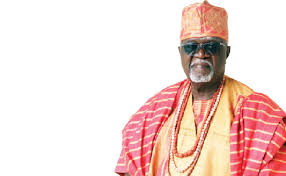
The chairman of the Ijebu Regbe Regbe Council and Otun Giwa of Bobayo age group, Engineer Chief Dr. E.B. Osoba, has reaffirmed the cultural and developmental significance of the traditional age-grade system in Ijebu land, describing it as a structured institution that goes beyond social bonding to community advancement.
Speaking on Frontline, a current affairs programme on Eagle 102.5 FM, Ilese Ijebu, Osoba stated that, “Regbe regbe is not just a social arrangement of people meeting for pleasure, it is a structured institution that brings together people of the same age bracket for the purpose of development, unity and collective responsibility in Ijebuland,” emphasizing that its foundation is deeply rooted in communal progress rather than entertainment.
He explained that the Regbe Regbe system is rooted in carefully classified age groups, traditionally organized in three-year intervals and named under the authority of the Awujale of Ijebuland, the paramount ruler of the Ijebu people, currently represented by the institution of the Awujale of Ijebuland.
He stated that, “The system is not arbitrary; it is historically structured. We are grouped within three-year intervals, and these groups are properly named and recognised under the authority of the Awujale, who remains the custodian of our culture and traditions,” stressing that the monarchy remains central to its legitimacy and continuity.
The chairman also noted that although the system has evolved over time due to population growth and modern social dynamics, its core objective remains the promotion of unity, shared responsibility, and community development.
According to him, “Even though we have seen changes over time due to population expansion and modern realities, the essence has never changed. It is still about unity, it is still about collective responsibility, and it is still about building our communities together as one people,” adding that modernization has not erased its foundational values.
Age-grade associations commonly known as Regbe Regbe have historically contributed to infrastructure and social development projects across Ijebu communities, including healthcare support, educational improvements, and cultural preservation initiatives. He stated that, “These age groups have played very important roles in our development history. Some provided ambulances, some supported schools, and others contributed to cultural preservation. This is not theory; it is practical contribution that has shaped Ijebuland,” stressing that their impact is visible across sectors.
He cited contributions made by various age groups toward the construction and furnishing of the new palace of the Awujale, as well as donations of medical equipment and ambulances, stressing that such interventions reflect the system’s development-driven philosophy. Osoba said, “When you look at the new Awujale palace, you will see the footprints of Regbe Regbe contributions. These are not small efforts. They are collective sacrifices made by age groups who believed in building something lasting for their land,” describing it as a legacy of communal responsibility.
Osoba, however, acknowledged growing concerns around fragmentation within age groups, noting that some have developed multiple factions over time. He described the situation as a deviation from the original structure, which he said was designed to maintain unity within each age cohort.
He explained that, “What we are seeing in some cases is fragmentation, where one age group begins to split into different versions, and that was never the original intention. The idea was unity within each cohort, not division,” adding that internal disputes weaken the collective strength of the system.
He also addressed the increasing financial requirements associated with joining some age groups, clarifying that while participation is not formally monetized, members are expected to contribute within their means toward group identity materials, administrative fees, and cultural attire such as Aso Oke. He said, “It is not correct to say membership is monetized. What we have are contributions based on capacity. People contribute for administrative needs, for cultural identity like Aso Oke, and for activities that move the group forward,” emphasizing that financial expectations are guided by affordability.
On leadership, Osoba explained that his role as Interim Chairman of the Regbe Regbe Council arose from internal restructuring following concerns about coordination within the system. He added that his appointment was meant to ensure stability and continuity pending further reforms. He stated, “My position is an interim arrangement. It came as a result of internal restructuring to restore order and coordination. It is not a permanent political position but a responsibility to stabilize the system while reforms are ongoing,” noting that leadership transition was necessary for harmony.
He further revealed that there are over 90 age groups approximately 93 across both male and female categories in Ijebuland, with the oldest dating back to the early 1930s. He said, “We have over ninety age groups in total, about ninety-three, and they cut across male and female categories. Some of the oldest trace their roots back to the early 1930s, and they still carry historical weight in our cultural identity,” highlighting the depth and longevity of the system.





 Eagle Fm