“LOCAL GOVERNMENTS DO NOT DESERVE ANYTHING, LET STATES DECIDE THEIR STRUCTURE” — ALABI CALLS FOR FULL STATE CONTROL OVER LG SYSTEM
Written by Oluwaseyi Amosun on June 12, 2026

Former Speaker of the Osun State House of Assembly and ex-member of the House of Representatives, Mojeed Alabi, has stirred fresh debate on Nigeria’s local government system, arguing that local governments, as currently structured, should not be entitled to statutory allocations but left entirely to states to design and fund based on their capacity and priorities.
Speaking on Friday during an exclusive interview on Frontline, a current affairs programme on Eagle 102.5 FM, Ilese-Ijebu, Ogun State, Alabi maintained that the existing structure of local government administration in Nigeria has become distorted by dependence on federal allocations, which in his view has weakened innovation, accountability, and true grassroots governance.
He argued that states should have full autonomy over the creation, structure, and financing of local governments, insisting that the current model has turned local councils into revenue-sharing units rather than functional administrative entities driven by local needs.
According to him, the uniform system imposed across the country has created inefficiencies and political manipulation in the creation and sustenance of local councils: “Local government do not deserve anything. Let each state decide how it wants to operate its local government. If you want a local government, create it. If you want one hundred local government, create it.”
Reflecting on his experience in local governance and inter-community administration, the former lawmaker recalled a practical example from the early 1990s that, exposed the inefficiencies and cost implications of Nigeria’s local government structure.
He said the incident helped him better understand the financial burden of maintaining grassroots governance and raised questions about sustainability in a system heavily dependent on external funding: “There was a problem between one village in my local government and another village in another local government, but that local government belonged to oyo state.We are in Osun state. We went there. I look at the number of resources, chairman of local government, deputy local government, vice chairman, all councilors, all revenue officers, that all went to that village. I wonder how many years we can spend before we can generate that kind of money from that particular place. So, local government is not bothered because they know exactly what they can afford”
Alabi explained that the essence of local governance has been undermined by what he described as an over-centralised revenue allocation system, where local governments largely depend on monthly federal allocations instead of generating their own resources.
He noted that this dependency has made many councils financially unviable and politically compromised.
Drawing historical and comparative references, the former lawmaker recalled that earlier reforms in Nigeria once involved merging local governments for efficiency during the era of Chief Obafemi Awolowo but argued that such rationalisation is no longer possible today due to political interference and financial dependency on Abuja: I discovered that in the era of Obafemi Awolowo, he merged local government. He merged some local government that are not viable. You, as a Nigerian, as a public affairs analyst, can anybody merge any local government today? No. They are even asking to create more. Even when they are not viable, because everybody depends on money coming from above”
Alabi maintained that the persistent reliance on federal allocations has also encouraged misuse and political control of local councils, where funds are often redirected or influenced by higher tiers of government rather than serving grassroots development: “For us to have proper local government in the way it ought to be. One, we should stop sharing revenue allocation on the basis of local government. Two, we should give all money due to the state to each, including local government money. Let them decide the number of local government they want to create. Let them decide the modality for their local government system. I’ve looked around the world, There is no system where local government are given money monthly” he said.
He argued that even recent attempts at granting autonomy to local governments have not translated into real independence, insisting that administrative control remains largely influenced by state-level political structures despite constitutional provisions:“If you give them money monthly, they will still sit down and decide what goes back up. He who pays the piper dictates the tune,” he said, stressing that financial independence is key to true local governance.
Alabi further criticized Nigeria’s federal structure and advocates for stronger decentralisation arguing that while the country professes a commitment to federalism, its governance practice still leans heavily toward uniformity in administration and policy implementation across diverse regions, The problem we have in Nigeria is that we are clamoring for federalism. At the same time, we want things to be done in a uniform way. Nothing is done in a uniform way anywhere in the world,” he said.



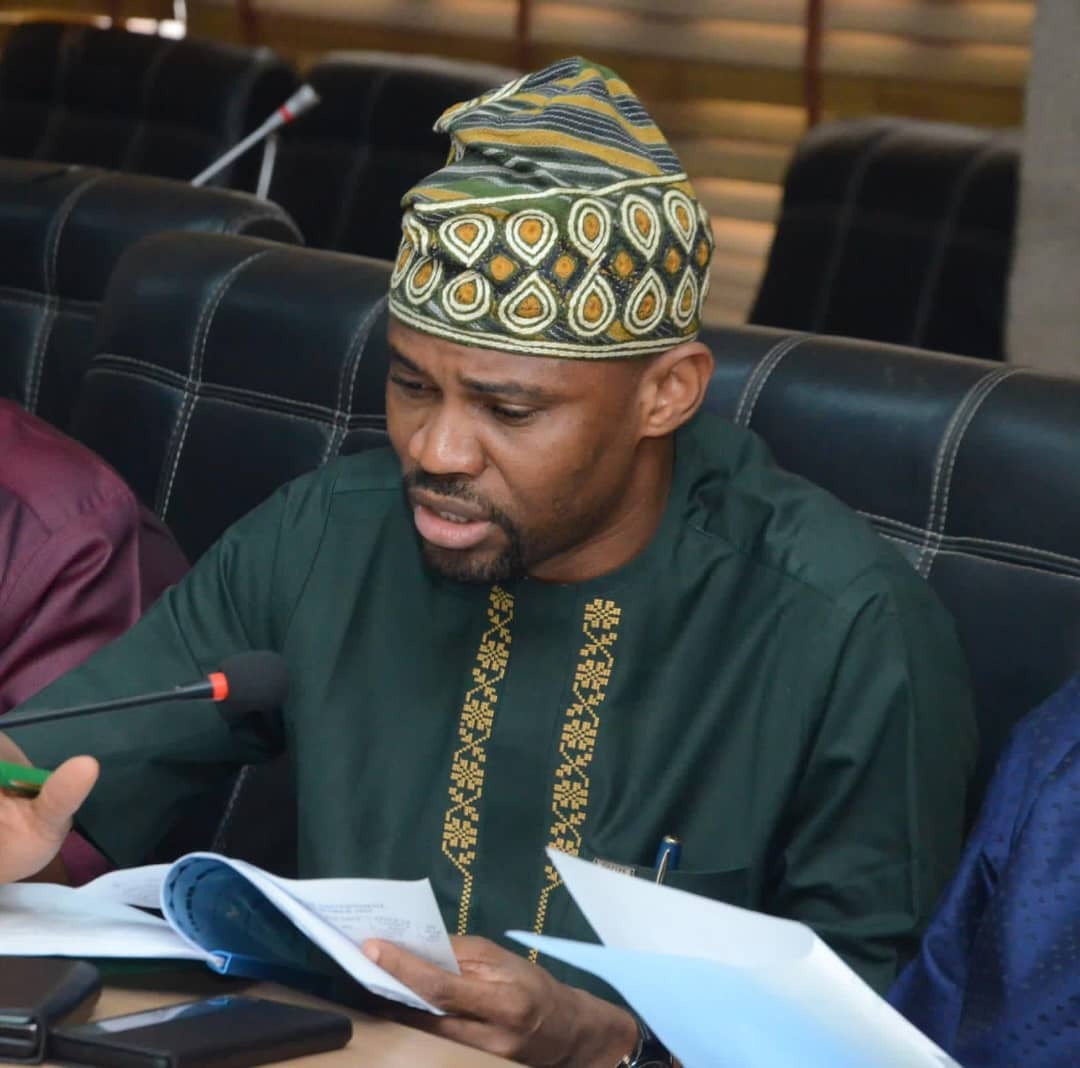


 Eagle Fm