NIGERIA NOT READY FOR LOCAL VACCINE PRODUCTION, SAYS HEALTH MINISTER
Written by Oluwaseyi Amosun on November 14, 2025
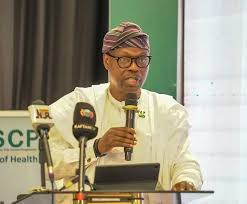
Image of Health Minister Dr Adetunji Salako.
The Minister of State for Health, Iziaq Salako, says Nigeria still lacks the capacity to produce vaccines locally despite ongoing government efforts to strengthen the country’s health value chain.
Speaking on Channels Television’s Politics Today on Thursday, Salako said Nigeria must first meet key economic and technical requirements before venturing into full vaccine manufacturing.
“Unfortunately, not,” he said when asked if the country can produce vaccines at the moment. “One of the key elements Nigeria is driving under the Presidential Initiative for Unlocking the Health Value Chain is to promote local vaccine development.”
He explained that vaccine production goes beyond national ambition and must make economic sense.
“It is not enough to say you want to produce vaccines. You have to consider comparative advantage. If producing locally costs more than importing, it defeats the purpose. All the economic and technical analysis has to be done,” he said.
Salako noted that while Nigeria’s population of over 240 million gives it a strong potential market, locally produced vaccines must still meet global demand and technology standards.
“When you produce a vaccine that is not globally used, that’s a challenge. This is high-end technology, and we can’t rush into it,” he added.
The minister assured Nigerians that the country’s health security system remains stable and prepared for emerging global threats.
“We have no cause for panic. There is 24/7 preparedness and constant surveillance to ensure health security,” he said.
According to him, Nigeria’s pandemic preparedness score has improved from 39 to 55 percent, reflecting better detection and response systems. He cautioned the public against assuming every flu-like illness is COVID-19.
Salako also revealed that the government has digitised about 78 percent of federal hospitals, including teaching and specialist facilities, simplifying patient access to care.
“With digitisation, patients no longer need physical cards. Records are now electronic,” he said.
On the rising migration of health professionals, he attributed the trend to a global shortage of healthcare workers, which has led many countries to recruit aggressively.
Salako noted that while some nations have reached up to 97 per cent vaccine coverage for childhood immunisations like DTP3, Nigeria continues to intensify efforts with support from WHO and UNICEF. The government recently launched a nationwide campaign targeting measles-rubella, polio, HPV, and other preventable diseases.





 Eagle Fm