NNPC Refineries May Never Work Again — Dangote
Written by Oluwaseyi Amosun on July 11, 2025
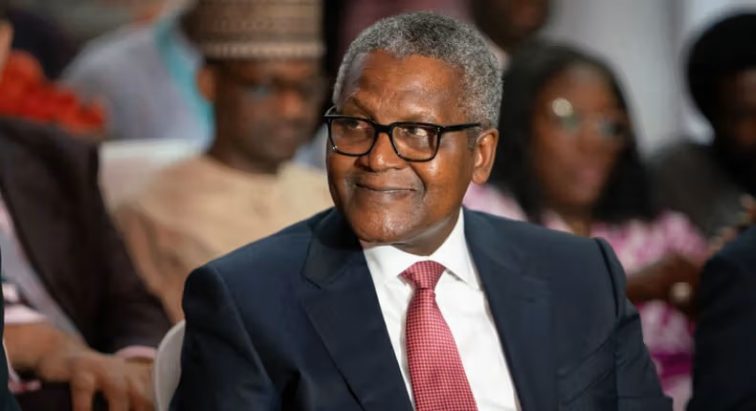
Aliko Dangote
The President of the Dangote Group, Alhaji Aliko Dangote, has cast serious doubt on the future viability of Nigeria’s state-owned refineries in Port Harcourt, Warri, and Kaduna, describing them as a long-standing economic drain.
Speaking on Thursday while hosting members of the Global CEO Africa from the Lagos Business School at the Dangote Petroleum Refinery in Lekki, Lagos, the billionaire industrialist disclosed that the Nigerian National Petroleum Company (NNPC) Limited has spent up to $18 billion on the refineries, yet they remain non-functional.
According to Dangote, the Dangote Refinery, with a capacity of 650,000 barrels per day, now dedicates over 50 per cent of its output to Premium Motor Spirit (petrol), whereas government-owned refineries committed only about 22 per cent to petrol when operational.
Recalling his previous involvement with the refineries, Dangote said his consortium acquired them in January 2007 during former President Olusegun Obasanjo’s administration, but was compelled to return them to the government following a policy reversal by President Umaru Musa Yar’Adua.
“The refineries that we bought before, which were owned by Nigeria, were doing about 22 per cent of PMS. We bought the refineries in January 2007. Then we had to return them to the government because there was a change of government.
“The managing director at that time convinced Yar’Adua that the refineries would work. They said they were given to us as a parting gift. As of today, about $18 billion has been spent on those refineries, and they are still not working. I doubt very much if they ever will,” he said.
Dangote likened the continued investment in the refineries to trying to modernise obsolete technology: “It’s like trying to modernise a car built 40 years ago, when technology and everything have changed. Even if you change the engine, the body will not take the shock of that new technology.”
His remarks echo earlier comments made by former President Obasanjo, who had publicly criticised the NNPC’s ability to manage the facilities. In 2024, Obasanjo disclosed that Shell and other international oil companies had declined his invitation to run the refineries, citing operational inefficiency.
Obasanjo stated that his administration had sold the refineries for $750 million to a group that included Dangote, but Yar’Adua cancelled the deal. “I told my successor that the refineries would not work. When you want to sell them later, you won’t even get $200 million as scrap. That is the situation we’re in,” he said.
Obasanjo added that the NNPC was aware of its limitations but continued operations for corrupt enrichment. “In a civilised society, those people should be in jail,” he asserted.
Despite multiple re-launches, two of the refineries were shut down again in early 2025—months after being declared operational by the then NNPC Group CEO, Mele Kyari. The 60,000 barrels-per-day Port Harcourt refinery ceased operations six months after reopening, while the Warri refinery was shut down just one month after a similar announcement.
Calls for privatisation of the government refineries have since intensified. The Manufacturers Association of Nigeria described the facilities as economic liabilities, urging the Federal Government to sell them. Some independent crude refiners have advised selling the refineries as scrap and redirecting the proceeds to modular refineries.
Public records show that the Federal Government has continued to pour billions into the non-functional assets: $1.4 billion was approved for the rehabilitation of the Port Harcourt refinery in 2021; Warri was allocated $897 million, and Kaduna $586 million. In that same year, N100 billion was reportedly spent on rehabilitation, averaging N8.33 billion monthly. Between 2013 and 2017, $396.33 million was expended on Turnaround Maintenance.
As of the time this report was filed, NNPC had not issued any official response. The company, which currently lacks a spokesperson, could not be reached through the contact numbers listed on its website. Calls and messages went unanswered.

 Eagle Fm