OLOGUN WARNS AGAINST RUSHED REFORMS, BLAMES LEGISLATIVE APATHY FOR DELAYS
Written by Oluwaseyi Amosun on January 26, 2026

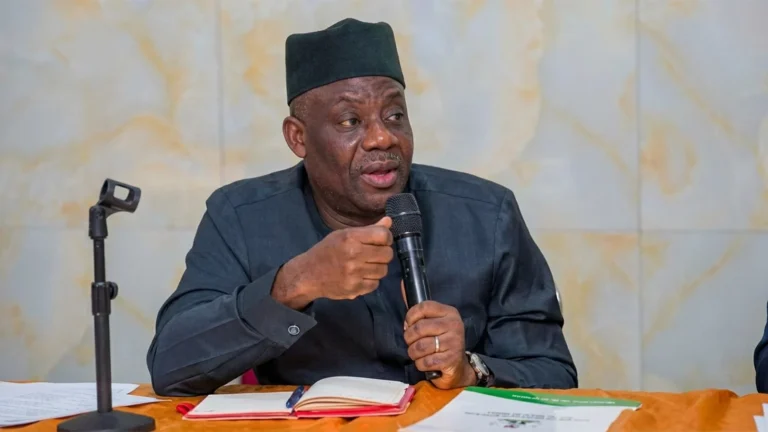
Photo File: Comrade Ayodeji Ologun, A Public Affairs Analyst
Director of the Centre for Responsive Governance, Mr Ayodeji Ologun, has warned against rushing amendments to Nigeria’s Electoral Act, blaming what he described as legislative apathy for the prolonged delay in reforming the law ahead of the 2027 general election.
Speaking during an exclusive interview on Eagle 102.5FM, Ilese, Ijebu, Ologun said while electoral reforms are necessary, the lack of urgency and commitment by the National Assembly has stalled the process, raising concerns about whether any amendment can take effect before the next general elections.
“THE ACCUSATION LACKS SPECIFICS” — OLOGUN
Responding to the former vice president’s claim, Ologun said while concerns about electoral reform were legitimate, the accusation against the Senate lacked concrete details.
“I really don’t know what specifics the former vice president is speaking to,” Ologun said.
“If you accuse an institution like the Senate of deliberately frustrating an electoral reform, a lot of issues come into question.”
He stressed that amending the Electoral Act is a complex legislative process that requires extensive consultations, public hearings, and stakeholder engagement, warning that haste could lead to unintended consequences.
RISKS OF FAST-TRACKING ELECTORAL REFORMS
Using the proposal to suspend the use of Permanent Voter Cards (PVCs) as an example, Ologun cautioned against reforms that could expose the system to manipulation.
“If people are allowed to print voter cards online, what happens to cloning? What happens to manipulation?” he asked.
“You could end up with voter slips printed in thousands or millions to influence election results.”
According to him, several civil society organisations had raised red flags over such proposals, insisting that reforms must prioritise electoral integrity over speed.
10TH NATIONAL ASSEMBLY UNDER FIRE
Despite defending due process, Ologun did not spare the current legislature, describing the 10th National Assembly as deeply unproductive.
“I hold it as an opinion that the 10th Assembly is the worst we have had between 1999 and now,” he said.
“Three years after the 2023 elections, the National Assembly only woke up late last year. That shows lack of proactiveness and insensitivity.”
He added that the frequent recesses taken by lawmakers further slowed the reform process, casting doubt on their commitment to credible elections.
2027 ELECTIONS LIKELY TO USE EXISTING ELECTORAL ACT
Ologun warned that time was running out for any meaningful amendment to take effect before 2027.
“If the new electoral law is not concluded and signed into law by March this year, we can as well forget about using it for the 2027 election,” he said.
Drawing from precedent, he noted that the Electoral Act 2022, signed close to the end of former President Muhammadu Buhari’s tenure, only applied after years of agitation.
“Most likely, the current Electoral Act will still govern the 2027 elections. Any amendment may only take effect in 2030,” Ologun concluded.
POLITICAL CALCULATIONS BEHIND THE DELAY?
The governance expert suggested that delays might not be accidental.
“There is nothing that happens in politics by accident,” he said.
“Lawmakers may be calculating how the reforms could affect their political survival, especially if election sequencing changes.”
He argued that a reordering of elections — such as holding the presidential poll first — could weaken lawmakers’ leverage over incumbents.
KANO POLITICS AND THE COLLAPSE OF NNPP
The discussion also shifted to Kano State politics, following reports of Governor Abba Kabir Yusuf’s defection to the APC, along with lawmakers and local government chairmen.
Ologun described the move as a devastating blow to the New Nigeria Peoples Party (NNPP).
“What is left of a party when it loses the governor, the House of Assembly, National Assembly members, and local government chairmen?” he asked.
“That is a systematic death of the NNPP in Kano.”
He added that NNPP leader Rabiu Musa Kwankwaso had publicly expressed his anger, describing the defection as a betrayal.
CALLERS REACT: CITIZENS EXPRESS FRUSTRATION
Several callers shared divergent views during the programme.
Emmanuel from Epe
Emmanuel argued that political strength goes beyond office holders.
“Kwankwaso still controls political support,” he said, adding that the National Assembly may be cautious to avoid public backlash if electoral amendments are mishandled.
Wasiu from Agege
Wasiu strongly criticised the delay in electoral reform.
“Any serious government would have started this immediately after being sworn in,” he said.
“Nigeria is bigger than any party. We want one man, one vote.”
He urged the government to embrace technology transparently to restore public trust.
OTHER CALLERS
Some listeners accused political leaders of treating Nigerians with contempt, while others called for stronger civic engagement and accountability.
PRESIDENT’S “HARD DECISIONS” AND ELECTORAL REFORM
Asked whether electoral reform could be one of the “hard decisions” President Bola Tinubu claimed not to regret, Ologun offered cautious support.
“I support the President’s right to make hard decisions,” he said.
“But leadership also requires explaining those decisions so citizens understand why they are necessary.”
MINORITY CAUCUS AND TAX LAW CONTROVERSY
On the controversy surrounding alleged discrepancies in newly enacted tax laws, Ologun backed the House of Representatives’ leadership in rejecting a report by a Minority Caucus committee.
“No minority caucus has the power to set up a committee whose report will bind the House,” he stated.
However, he acknowledged public concern over claims that the law signed by the President differed from what lawmakers passed, recommending judicial intervention to resolve the matter.
Wrapping up, Ologun reiterated that while reforms must be thorough, the absence of urgency by lawmakers could cost Nigeria credible elections.
“Electoral reform can be done well and still be done on time,” he said.
“Unfortunately, this National Assembly does not appear to be in a hurry.”

 Eagle Fm