OSHOMA CALLS FOR GENUINE LOCAL GOVERNMENT FINANCIAL AUTONOMY
Written by Oluwaseyi Amosun on October 9, 2026

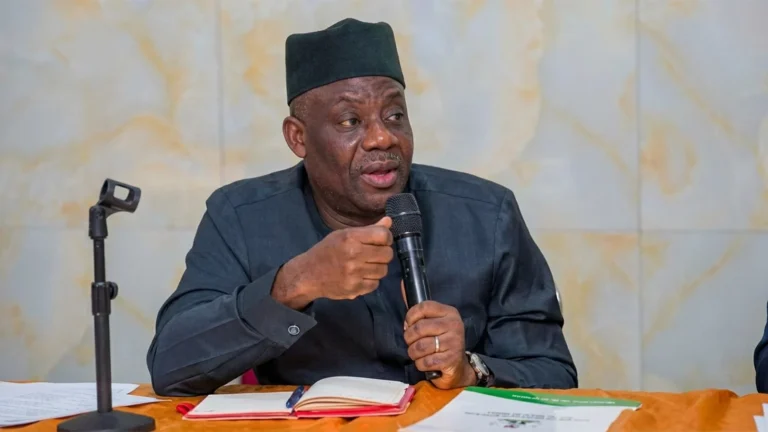
Photo file:Liborous Oshoma
Legal practitioner, rights advocate and public policy analyst, Liborous Oshoma, has called for reforms to strengthen local government financial autonomy, arguing that excessive state government control over council funds undermines grassroots administration and limits the capacity of elected officials to deliver essential services.
Oshoma made the submission during FRONTLINE, a current affairs programme on Eagle 102.5 FM, Ilese-Ijebu, Ogun State, on October 9, 2026, while discussing the implementation of the Supreme Court’s decision on local government financial autonomy. He argued that the practical benefits of the judgment would remain limited unless the authorities concerned established a framework that enabled local councils to manage their finances and perform their constitutional responsibilities effectively.
The discussion examined the relationship between state governments and local councils, particularly the administration of funds allocated to the third tier of government through the State Joint Local Government Account. Oshoma maintained that the constitutional provision governing the account should not be interpreted as granting state governments unrestricted control over money intended for local governments.
According to him, the central issue is whether local councils can exercise meaningful administrative and financial independence when their resources remain subject to arrangements that allow state authorities to determine how the funds are managed. He argued that financial autonomy must translate into the ability of councils to plan projects, allocate resources according to local needs and account for expenditure to residents.
“The only way we can insulate the local government from that is either we go back to fiscal federalism, where the local government generates revenue, or that the account is interpreted in a way that strictly belongs to the local government,” Oshoma said.
He advocated a governance structure in which each tier of government has clearly defined responsibilities and sufficient financial capacity to fulfil them. In his view, greater fiscal independence would encourage local governments to develop their revenue bases, improve accountability and compete in delivering services to their communities rather than depend excessively on decisions made by state authorities.
Oshoma expressed concern that local governments could be reduced to institutions that primarily pay salaries without having sufficient resources to execute meaningful development projects. He argued that councils should have the financial capacity to respond to the needs of their residents, including improvements in local infrastructure, primary healthcare and other essential community services.
He maintained that local government autonomy should not be treated solely as a constitutional or judicial question, but as an issue directly connected to the quality of governance experienced by citizens at the grassroots. According to him, residents should be able to identify tangible improvements in their communities when funds allocated to their councils are released and properly managed.
The legal practitioner also emphasised the need for accountability alongside financial independence, arguing that autonomy should not remove the obligation of elected council officials to account for public resources. He called for transparent financial management, effective oversight and clear rules that would prevent the diversion or misuse of funds meant for local development.
His position reflects a wider debate over the implementation of the Supreme Court’s July 2024 judgment on local government autonomy, which directed that allocations due to local governments should be paid directly to them rather than administered through state governments. The judgment sought to address longstanding concerns about state control of council finances, although translating financial independence into effective administration remains a significant governance challenge.
While, he argued that legal pronouncements must be followed by practical administrative arrangements capable of protecting the interests of local governments. He maintained that the interpretation and management of the State Joint Local Government Account should support the constitutional functions of councils rather than provide a basis for excessive state interference.
The discussion also highlighted the importance of fiscal federalism in strengthening Nigeria’s system of government. Oshoma argued that greater clarity over the financial responsibilities of federal, state and local authorities could encourage efficiency, healthy competition and accountability, provided each level of government manages its resources responsibly.
He said local governments should have the capacity to identify their communities’ priorities and implement projects without unnecessary administrative restrictions. Such an arrangement, he argued, would make grassroots governance more responsive and improve the relationship between elected officials and the people they represent.
The challenge, however, extends beyond the release of allocations, as councils also require competent administration, transparent procurement, proper budgeting and mechanisms for monitoring public expenditure. Financial autonomy without accountability could expose public resources to further misuse, making institutional safeguards essential to the success of any reform.
Oshoma’s call therefore placed emphasis on both the independence of local councils and the responsibility of public officials to demonstrate that available resources are being used for their intended purposes. He maintained that the ultimate test of local government autonomy should be whether councils can deliver services, undertake development projects and respond effectively to the needs of their residents.
He urged the relevant authorities to ensure that the Supreme Court’s decision produces measurable changes in grassroots administration rather than remain a legal declaration with limited practical effect. According to him, a functional local government system, supported by adequate resources and transparent financial management, is necessary for more effective governance across the country.


 Eagle Fm