OSUN DECIDES 2026: 10 THINGS YOU NEED TO KNOW BEFORE THE GOVERNORSHIP ELECTION
Written by Oluwaseyi Amosun on August 14, 2026
By Babarinde Favour and Lemo Oluwadamilola
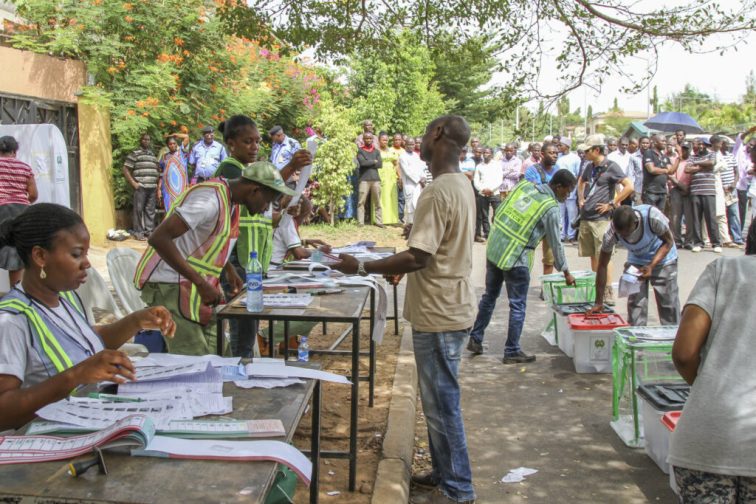
Osun State goes to the polls on Saturday, August 15, 2026, in a governorship election that has attracted national attention because of the competitiveness of the race, the state’s political history and its position as one of Nigeria’s off-cycle election states.
More than 1.9 million voters who have collected their Permanent Voter Cards are eligible to participate in the election, which will be conducted across the state’s 30 local government areas, 332 registration areas and 3,763 polling units. INEC says Osun has 2,339,233 registered voters, of whom 1,906,390, representing 81.5 per cent, have collected their PVCs.
Fifteen candidates are on the ballot, but the contest has increasingly centred on three major contenders: incumbent Governor Ademola Adeleke of the Accord Party, Bola Oyebamiji of the All Progressives Congress, APC, and Najeem Salaam of the African Democratic Congress, ADC. Reports from the final stages of the campaign suggest that the election is likely to be shaped not by a single issue, but by a combination of incumbency, candidate popularity, party structure, grassroots mobilisation, previous voting patterns, federal influence, security, turnout and voters’ assessment of the incumbent’s performance.
But before Osun votes, there are ten things voters need to understand about the election and what could ultimately determine its outcome.
1. More than 2.3 million people are registered to vote
Osun has 2,339,233 registered voters for the 2026 governorship election, according to INEC.
However, the number of registered voters is different from the number of people who are immediately eligible to vote. INEC says 1,906,390 Permanent Voter Cards have been collected, representing 81.5 per cent of the state’s registered electorate.
This means 432,843 registered voters are not part of the pool of people with collected PVCs. INEC has also clarified that some voters who had damaged, defaced or lost PVCs applied for replacements, while 6,101 people who applied for replacement cards printed downloadable copies of their PVCs.
The figures matter because the election will ultimately be decided not by the size of the register but by the number of eligible voters who actually turn up, are successfully accredited and cast their ballots.
That makes turnout a potentially decisive factor. A candidate with a highly organised support base could benefit if overall turnout is low, while a broader turnout could change the electoral arithmetic in several local government areas.
Electoral figure Number
Registered voters 2,339,233
PVCs collected 1,906,390
PVCs uncollected 432,843
PVC collection rate 81.5%
Local Government Areas 30
Registration Areas/Wards 332
Polling Units 3,763
2. Why is Osun voting in 2026 instead of 2027?
Osun is one of Nigeria’s off-cycle governorship states, meaning its governorship election does not take place alongside the presidential, National Assembly and most other governorship elections.
The reason goes back to the disputed April 14, 2007 governorship election, in which INEC declared Olagunsoye Oyinlola of the PDP the winner.
Rauf Aregbesola of the then Action Congress rejected the result and challenged it in court. The legal battle lasted more than three years, passing through election tribunals and the Court of Appeal before the appellate court, on November 26, 2010, declared Aregbesola the winner after nullifying results from ten local government areas.
Aregbesola was sworn in on November 27, 2010.
That judicially delayed change of governor became the foundation of Osun’s separate electoral timetable. Rather than beginning a fresh four-year tenure in 2007, Aregbesola’s tenure effectively began in November 2010, moving subsequent governorship elections away from Nigeria’s regular 2011, 2015, 2019 and 2023 cycles.
The result is the election Osun is holding today: another governorship contest in 2026, months before Nigeria’s next nationwide governorship elections in 2027.
3. Fifteen candidates are contesting, but the race has three dominant forces
INEC’s final list contains 15 governorship candidates, but the political battle has increasingly been defined by three major contenders: Ademola Adeleke of Accord, Bola Oyebamiji of the APC and Najeem Salaam of the ADC. Current reports identify the three as the leading figures in the contest, although other candidates remain capable of influencing the final vote distribution.
Adeleke is seeking a second term after winning the 2022 election under the PDP. Oyebamiji is attempting to return the APC to the Government House after the party lost the seat to Adeleke four years ago, while Salaam is positioning the ADC as an alternative to the two dominant political structures.
The presence of other candidates could become significant if the election is closely fought. In a race where the leading candidates are separated by a relatively small margin, votes taken by smaller parties can alter the final arithmetic even if those candidates do not come close to winning the election themselves.
The election is therefore not simply about who finishes first. It is also about how the votes are distributed across the 15 candidates and where those votes are concentrated.
1. Accord Party (A) — Ademola Adeleke
2. Action Alliance (AA) — Olanrewaju Farinloye
3. African Action Congress (AAC) — Olajide Esan
4. African Democratic Congress (ADC) — Najeem Folasayo Salaam
5. African Democratic Party (ADP) — Yemisi Adeagbo Opawoye
6. All Progressives Congress (APC) — Munirudeen Bola Oyebamiji
7. Allied Peoples Movement (APM) — Adewale Adebayo
8. Action Peoples Party (APP) — Clement Adesuyi
9.. Boot Party (BP) — Masilo Adeleke
10.. New Nigeria Peoples Party (NNPP) — Taofeek Adeleke
11. Peoples Redemption Party (PRP) — Saliu Oyelami
12. Young Progressives Party (YPP) — Olalekan Ogunsakin
13. Zenith Labour Party (ZLP) — Adefemi Adesuyi
14.. Social Democratic Party (SDP) — Dr Francis Olugbenga Ajala
APGA’s Adeyemi-Doro Adesina has withdrawn from the race and endorsed the APC candidate, while SDP’s Francis Olugbenga Ajala was added to the ballot by INEC on August 12 following a court judgment.
4. Adeleke has incumbency on his side — but he is running under a different party
Governor Ademola Adeleke enters the election with one of the most obvious advantages in politics: incumbency.
He has spent nearly four years in office, giving him the opportunity to campaign on the record of his administration, including infrastructure projects, workers’ welfare, education, healthcare and other programmes his administration says have defined its tenure.
He also has the advantage of an existing political network across the state and the visibility that comes with occupying the Government House.
But there is an important difference between the 2022 election and Saturday’s contest.
Adeleke won in 2022 as the candidate of the Peoples Democratic Party.
He is now contesting under the Accord Party.
That makes one of the biggest questions of the election whether Adeleke can transfer the coalition that carried him to victory four years ago to a completely different party platform.
Reports indicate that despite his departure from the PDP, he continues to enjoy support from sections of the party’s political structure and influential figures who have chosen to back his re-election bid. The absence of a PDP governorship candidate also means Adeleke does not face the direct competition from the party that brought him to power in 2022.
His challenge is therefore to demonstrate that his support base is attached primarily to Adeleke the politician, rather than simply to the PDP platform.
5. Oyebamiji has the APC structure and federal backing
Bola Oyebamiji represents the APC’s attempt to reclaim Osun after the party’s defeat in 2022.
He is not new to the state’s political establishment. He served as Osun Commissioner for Finance under the APC administrations and has presented himself as an experienced administrator and economic manager capable of steering the state’s finances and attracting investment.
The APC also brings significant organisational strength to the contest.
It is the party controlling the Federal Government, and President Bola Tinubu has openly backed its campaign in Osun. At the APC’s final campaign rally in Osogbo, Senate President Godswill Akpabio, representing the President, urged voters to come out without fear and assured them of adequate security for the election.
The federal connection could be an advantage for Oyebamiji, particularly in a state where political actors frequently calculate the benefits of alignment between state and federal governments.
But the APC candidate also carries the weight of the party’s previous administration.
The controversy surrounding the modulated salary regime under the previous APC government remains part of the political conversation, particularly among workers and organised labour. For Oyebamiji, the challenge is to benefit from the APC’s structure without allowing the opposition to turn the memories of the previous administration into a referendum against him.
6. Federal influence versus state incumbency could shape the contest
One of the central questions surrounding the election is whether the influence of the Federal Government can overcome the advantage of a sitting governor.
The two leading camps have different forms of political strength.
Adeleke controls the state government and has spent almost four years building his own political network. Oyebamiji, meanwhile, is backed by the APC, the ruling party at the federal level, with senior national figures actively campaigning for him.
That dynamic makes the election an interesting test of how Osun voters approach the relationship between state and federal power.
The APC’s argument is that electing an APC governor would strengthen Osun’s relationship with Abuja and potentially improve the state’s access to federal opportunities. The opposition’s counterargument is that voters should judge the governor primarily by what happens within the state rather than by political alignment with the centre.
President Tinubu’s message to Osun voters ahead of the election has also focused on peaceful participation and security, with the President urging voters to come out and exercise their franchise without fear.
Whether federal influence translates into actual votes, however, will depend on the ability of the APC structure to convert national support into grassroots mobilisation.
That is where the election-day machinery becomes important.
7. Osun West could be the most closely watched battleground
Osun West presents perhaps the most unusual political equation in Saturday’s election because the three leading candidates all have significant political connections to the district.
Adeleke is from Ede, Oyebamiji is from Irewole, while Salaam is from Ejigbo. This means the district is not simply a traditional Adeleke stronghold or a straightforward APC battleground. It is an area where the three leading political forces have identifiable roots and networks.
The 2022 result provides an important starting point. Adeleke won 144,558 votes in Osun West against Oyetola’s 116,860, giving him a district advantage of 27,698 votes. The district therefore supplied almost the entire margin by which Adeleke eventually won the statewide election.
But reproducing that advantage in 2026 may not be straightforward.
Adeleke is no longer running on the PDP platform, Oyebamiji is from the district himself, and Salaam has a political history and grassroots presence that could attract voters who might otherwise have gone to either of the two major camps.
The numbers also explain why particular areas within the district deserve attention. Reports put the combined registered electorate of Ede North, Ede South, Egbedore and Ejigbo at 319,489, while the Irewole, Ayedaade and Isokan axis accounts for 222,786 registered voters. Those figures make the Ede and Ikire federal constituencies particularly important in the wider Osun West calculation.
The real question is therefore not simply who wins Osun West. It is by how much each candidate wins or loses in the district’s major population centres.
If Adeleke produces another large margin around Ede, he could create an early cushion. If Oyebamiji succeeds in consolidating Irewole and surrounding areas, the APC could significantly reduce that advantage. If Salaam performs strongly enough to divide the votes of the two major candidates, the overall arithmetic becomes even more difficult to predict.
Osun West could therefore become the place where the election’s three-way character is most clearly exposed.
8. Osun Central and Osun East could determine whether either candidate can build a statewide majority
While Osun West attracts attention because of the origins of the three leading candidates, the election cannot be won through one senatorial district.
Osun Central and Osun East will be equally important because the state’s governorship election is determined by the total statewide vote, subject to the constitutional requirement that the winner must also secure at least one-quarter of the votes cast in at least two-thirds of the local government areas.
Osun Central contains Osogbo, the state capital and one of the state’s largest voting centres. The area is likely to attract intense competition because control of the capital carries both symbolic and numerical importance. The district also contains a mix of urban and rural communities where party organisation and candidate popularity could produce different outcomes.
Osun East presents another important test. In 2022, Oyetola won the district with 121,873 votes against Adeleke’s 120,080, a difference of only 1,793 votes. That narrow margin shows how competitive the district can be and why relatively small movements in voter support could become significant in 2026.
The major question across these two districts is whether the APC can rebuild the advantage it enjoyed in parts of the state in 2022, whether Adeleke can expand beyond his traditional strongholds, and how much of the vote the ADC and other parties can take from both camps.
The election may therefore be decided not by a dramatic landslide but by the accumulation of smaller advantages across several LGAs.
9. Security and election-day logistics could affect turnout and confidence
Security has become one of the biggest concerns ahead of Saturday’s election.
Reports indicate that more than 25,000 security personnel have been deployed for the poll, while additional personnel and equipment have been mobilised to secure polling units, election officials, voters and sensitive materials.
The security concern is not theoretical. The campaign period has featured political tension and reports of violence, including a shooting incident in Esa-Oke shortly before the election. Such incidents can have an effect beyond the immediate victims because fear can discourage voters from travelling to polling units.
The Federal Government and security authorities have repeatedly assured residents that adequate arrangements have been made to protect voters and ensure a peaceful election. Senate President Godswill Akpabio, speaking at the APC’s final rally in Osogbo, urged residents to vote without intimidation and said adequate security had been provided.
But the real test begins when voting starts.
Security personnel will need to protect voters and election officials without becoming perceived as partisan actors. INEC will also have to ensure that election materials arrive on time and that accreditation and voting proceed smoothly across the state’s 3,763 polling units.
A peaceful election with strong turnout could strengthen confidence in the process. Conversely, violence, intimidation or serious logistical failures could suppress participation and potentially affect the outcome in specific areas.
10. The 2022 election is the starting point — but it cannot predict 2026
The 2022 governorship election remains the clearest reference point for understanding Osun’s political map.
Adeleke, then the PDP candidate, defeated incumbent APC governor Gboyega Oyetola with 403,371 votes to 375,027, giving him a winning margin of 28,344 votes.
But almost every important political variable has changed since then.
Adeleke is no longer contesting under the PDP. The APC has replaced Oyetola with Oyebamiji. The ADC has emerged as another significant political force under Salaam. The PDP has no governorship candidate on the ballot, while the APC is contesting with the advantage of controlling the Federal Government.
The geographical distribution of the 2022 vote remains useful, however. Adeleke won Osun West decisively, while Osun Central was closely divided and Oyetola narrowly won Osun East. Those patterns provide clues about the areas where each political camp has previously demonstrated strength.
But voters are not obliged to reproduce their 2022 choices.
The central question on Saturday is whether Adeleke can defend the coalition that delivered his first term, whether Oyebamiji can rebuild the APC’s winning coalition, and whether Salaam can attract enough support to disrupt the two dominant camps.
What voters should watch on election day
Beyond the campaigns and political endorsements, several indicators could provide an early sense of where the election is heading.
Turnout will be one of the most important. With 1,906,390 PVCs collected, the eventual number of accredited voters will show how effectively the parties converted their mobilisation efforts into actual participation.
Osun West will provide an immediate test of Adeleke’s political base and Oyebamiji’s ability to challenge it.
Osogbo and Osun Central will reveal whether the APC or Accord can establish a meaningful advantage in one of the state’s most politically important areas.
Osun East will test whether the APC can reproduce its 2022 strength or whether Adeleke can overturn the narrow advantage Oyetola enjoyed there.
The ADC vote will be important even if Salaam does not win. A significant ADC performance could reduce the margins of either of the two leading candidates.
Security and logistics will also matter. Delayed materials, technical problems, violence or voter intimidation could affect turnout in particular polling areas.
And finally, the collation process will matter as much as voting itself. Every statewide result begins with the counting and recording of ballots at the polling-unit level.
The bigger question for Osun
Saturday’s election is about more than choosing between three leading candidates.
It is also a test of how voters respond to incumbency, political realignment, federal influence and competing claims about governance.
For Adeleke, it is an opportunity to secure a second term and demonstrate that the political coalition that brought him to power in 2022 remains intact despite his movement to Accord.
For Oyebamiji, it is an opportunity for the APC to return to the Government House and demonstrate that its organisational strength and federal connection can overcome the advantage of an incumbent governor.
For Salaam, it is an opportunity to establish the ADC as a genuine political force in Osun and prove that a third candidate can break through the traditional two-party contest.
For the voters, however, the calculation is simpler.
They must decide which candidate they trust with the next four years of governance.
And when the campaigns end, the endorsements disappear and the political speeches stop, the decision will ultimately come down to what happens at 3,763 polling units across 30 local government areas.
Conclusion
Osun’s 2026 governorship election arrives with almost every ingredient of a closely contested Nigerian election: a sitting governor seeking re-election, an opposition party backed by the Federal Government, a third force attempting to disrupt the established political order, a history of tight electoral contests, competing claims over performance and growing concerns about security and electoral integrity.
The numbers show why the race is difficult to dismiss as a foregone conclusion. More than 1.9 million voters have collected their PVCs, while the 2022 election was decided by only 28,344 votes between Adeleke and Oyetola. That margin is small enough to show how changes in turnout, party support and local government performance can alter the final result.
The political map has also changed. Adeleke is defending his record under a new party, Oyebamiji is carrying the APC’s hopes of reclaiming the state, and Salaam is attempting to convert the ADC’s political momentum and his own grassroots network into votes.
But ultimately, the most important figures will not be the number of endorsements, campaign rallies or political predictions.
They will be the votes counted at each polling unit.
Osun decides on August 15. And when the ballots are counted, the numbers will tell the story.




 Eagle Fm