Strengthening the Shield: How Ogun’s New Security Bills Seek to End Crime and Protect Citizens
Written by Oluwaseyi Amosun on August 1, 2026
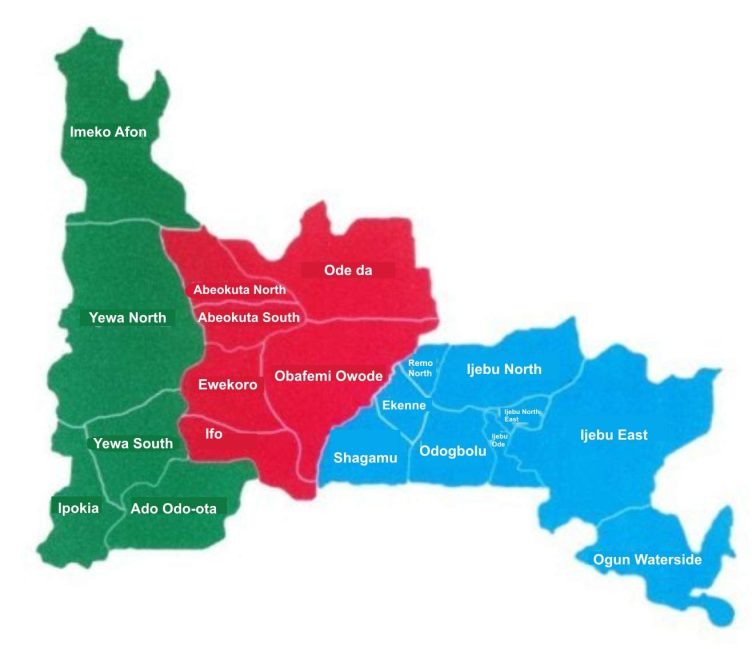
Photo File: An Image of Ogun state map
In a decisive effort to tackle security challenges and safeguard its growing economic stature, the Ogun State Government has initiated a major legislative overhaul aimed at crippling violent crime, cultism, and ritual killings. Following approval by the State Executive Council on Thursday, July 30, 2026, the Governor Dapo Abiodun-led administration is set to transmit four landmark executive bills to the Ogun State House of Assembly. This comprehensive legal package reflects a proactive strategy to eliminate systemic legal loopholes and adapt the state’s justice system to modern security threats.
The proposed statutes comprising the Group Liability for Offences of Violence, Extortion and Secret Societies (GLOVES) Bill, the Victims’ Rights Bill, the Human Sacrifice Prevention and Prohibition Bill, and the Missing Persons Bill—target critical gaps in the existing criminal law framework. Explaining the imperative behind the executive action, the State Attorney-General and Commissioner for Justice, Oluwasina Ogungbade (SAN), emphasised that these bills serve as a direct response to crimes that threaten public safety and undermine economic stability.
A central element of this reform package is the GLOVES Bill, designed specifically to neutralise cultism, violent gangs, and extortion rings through collective accountability. Under its provisions, members of unlawful or proscribed societies will face joint legal liability for offences committed by their associates in furtherance of group goals. By establishing group liability, the law aims to dismantle the organizational support structures of criminal gangs, ensuring that members can no longer evade prosecution simply by claiming non-direct involvement in specific violent acts.
Equally significant is the Human Sacrifice Prevention and Prohibition Bill, which seeks to eradicate the scourge of ritual killings across the state. Recognizing that traditional penal codes were not explicitly structured to address ritualistic murder and its network of accomplices, this legislation creates distinct, specialised offences designed to target every link in the criminal chain. Complementing this is the Missing Persons Bill, which establishes a clear statutory protocol to streamline law enforcement investigations. The bill eliminates bureaucratic and legal delays, giving security agencies faster access to critical financial records and personal data required to track missing persons and apprehend perpetrators.
Beyond prosecution and law enforcement, the legislative package introduces a vital humanitarian component through the Victims’ Rights Bill. Marking a first in the state’s jurisprudence, this bill establishes a dedicated statutory framework to protect, support, and advocate for victims of crime throughout every stage of the legal process from initial investigation through to prosecution and beyond. By guaranteeing welfare, restitution, and formal state representation for victims, the government seeks to restore public confidence in the administration of justice.
As Ogun State continues to position itself as one of Nigeria’s premier industrial and investment hubs, maintaining a secure, predictable environment is essential. By combining aggressive legal deterrents against organised crime with enhanced protections for victims and refined investigative powers, this legislative initiative reinforces a vital principle of modern governance: that sustainable economic prosperity relies entirely on the firm, unyielding rule of law.





 Eagle Fm