TINUBU’S INEXPERIENCE IS COSTING NIGERIA – DELE MOMODU PREACHES ADC AS ALTERNATIVE
Written by Oluwaseyi Amosun on April 16, 2026
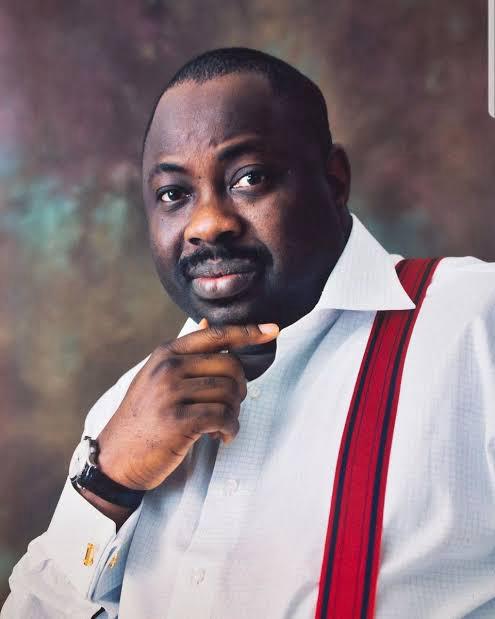
A Chieftain of the African Democratic Congress (ADC), Bashorun Dele Momodu, has intensified his criticism of President Bola Ahmed Tinubu’s administration, arguing that Nigeria is suffering from what he described as “leadership inexperience at the national level.”
He said the challenges facing the country are not accidental but stem from the quality of leadership at the centre, insisting that governance has not matched expectations since 2023.
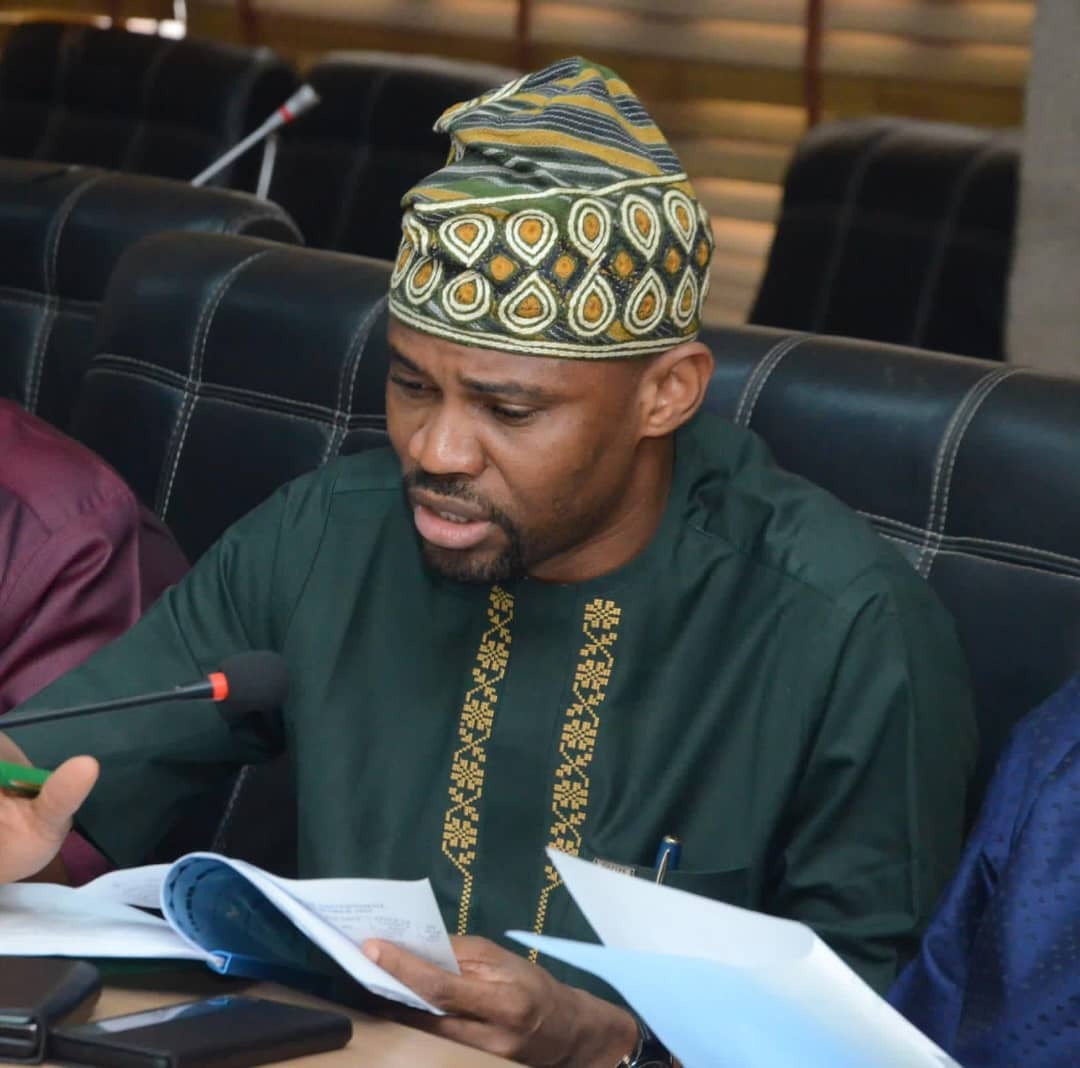
He made the remarks during an exclusive interview on Frontline, a current affairs programme on Eagle 102.5 FM, Ilese-Ijebu, Ogun State, where he also defended opposition politics, the ADC coalition, and the political future of key figures like Atiku Abubakar and Peter Obi.
Momodu maintained that while Tinubu was politically experienced at the state level, governing a complex nation like Nigeria requires a different level of competence, coordination, and exposure.
He argued that President Tinubu’s emergence exposed the difference between local political dominance and national governance capacity. According to him, Lagos-style political mastery does not automatically translate into effective national leadership.
He said: “Nigerians can now see what lack of experience has caused President Bola Ahmed Tinubu. He was a regional leader in the southwest, he was able to control Lagos almost by the jugular, but when you now move from that level to the national stage, governing a country like Nigeria, you need a different kind of experience, exposure and political maturity, and I believe that is what is missing in what we are seeing today.”
He further insisted that leadership at the presidency is not about political strategy alone but about delivery, coordination and governance outcomes.
“Even those who thought Asiwaju was a master strategist are beginning to see that strategy alone is not governance. The only strategy you cannot rely on is how to manoeuvre into power and then fail to deliver on the promises made before taking that power. Governing Nigeria is not about getting there, it is about what you do after getting there, and that is where experience becomes critical.”
Momodu added that political leadership in Nigeria has often been misunderstood as political conquest rather than national administration, warning that the consequences are now visible in the economy and governance structure.
ADC, OPPOSITION POLITICS AND NATIONAL POLITICAL BALANCE
On the role of the ADC and opposition politics, Momodu said the party represents a necessary counterbalance in Nigeria’s political environment, especially at a time when he claims opposition structures are weakening.
He explained: “In the days of trials and tribulations, we sometimes have to run to the elders of the house. It is not only in Nigeria, we have seen it globally. In America, when the Democrats needed to return to power, they went for Joe Biden. When the Republicans needed to return, they went for Donald Trump. These are what I call candidates of necessity. So, experience sometimes becomes an advantage, not a disadvantage.”
He argued that political longevity should not be dismissed, especially in a system where governance challenges require tested hands.
“I do not think you can simply discard experience in a country like Nigeria. Buhari gave up after 2011, but people still went back to him because they believed in his structure. In politics, you also need support from different regions, especially the North, and experience plays a role in that arrangement. That is my honest view.”
Momodu further defended Atiku Abubakar’s repeated presidential contests, describing them as a demonstration of resilience rather than desperation.
“Alhaji Atiku Abubakar has said this may be his last attempt, and I respect that. This is his seventh attempt, and I see it as spiritual determination. If he succeeds, it will be one of the greatest political comebacks in African history. And if he does not, I will still respect his courage, his tenacity and his consistency. Nigeria has wasted too many experienced people in the past, and I hope we do not repeat that mistake.”
He also warned against dismissing political actors based on sentiment rather than competence.
GOVERNANCE, ECONOMY AND THE QUESTION OF DIRECTION
Momodu was more critical when addressing Nigeria’s current economic situation, arguing that policy decisions have not translated into tangible relief for citizens.
He stated: “Let me be very honest with you. When President Bola Ahmed Tinubu came into power, there was hope, yes. But today, Nigerians are suffering. People are groaning, people are lamenting, people are struggling. We have borrowed more money than any administration in Nigeria’s history, and yet the people are not feeling the impact.”
He added that economic hardship is now widespread and measurable at household level.
“The same governors who are now all under his wings, if they are not able to fly under his wings, then something is wrong. We have borrowed money today more than any other administration in the history of Nigeria, and still Nigerians are suffering. I read somewhere last night, I think each of us now, over 200 million Nigerians, if you look at our debt portfolio, we are each owing almost 700,000 Naira, each as an individual, multiply that by over 200 million people”.
Momodu stressed that his criticisms were not rooted in opposition politics but concern for national survival.
“I am not speaking as an enemy of government. I am speaking as someone who loves Nigeria. We have some of the most brilliant people in the world, but we are failing to organise ourselves because of ethnicity, political manipulation and lack of unity. That is the real problem.”
DEMOCRACY, POWER AND ALLEGATIONS OF CONTROL
Momodu also raised concerns about what he described as increasing concentration of political influence around the presidency, warning that it could weaken democratic structures.
He said: “If opposition parties are collapsing one after the other, you cannot pretend that everything is normal. Democracy requires balance. When one side appears to be dominating every structure, every institution, every process, then people will begin to ask questions. Tinubu should leave Nigeria better than he met it. So, if all opposition leaders suddenly collapse, and you don’t think he has his fingers in the pies, so be it. That’s number one. Number two, Bola Ahmed Tinubu came to power and took a very courageous decision by yanking off the oil subsidy from day one. But we have not seen the positive effects of it today. People are groaning, people are moaning, people are lamenting, like the typical Jeremiah.”
He added that governance must be separated from political domination.
“It is not just about winning power. It is about how power is used after winning it. If everything is controlled from one centre, then democracy begins to lose meaning. That is why I am worried.”
Momodu insisted that Nigeria’s democratic system must remain competitive, transparent and institutionally balanced, warning that anything short of that could create long-term instability.
He raised strong concerns about what he described as a dangerous drift toward excessive concentration of power, warning that while dominant party systems may exist globally, the Nigerian situation risks evolving into something far more troubling if not checked.
He carefully distinguished between a strong ruling party and what he considers the far more dangerous reality of decision-making being concentrated in a single individual, arguing that such a pattern undermines democratic institutions and silences internal dissent across political structures.
He stressed that governance must not be reduced to the personal discretion of one political figure, especially in a country as complex and diverse as Nigeria, where institutional balance is critical. He added that such a trajectory, if left unchecked, could weaken democratic accountability and create a culture of political submission.
He said, “One party is still okay, after all, in China, they operate, you know, the ruling party is a very strong one, but a situation where only one man takes every decision, only one man is likely to become governor, who becomes senator, who becomes this, who becomes that, and others will just sit down there without altering a whimper. It’s very dangerous for a country. But like I said, we play our own part and leave the rest to God.”
Expanding on this concern, Momodu argued that Nigeria must urgently resist what he described as the early signs of authoritarian consolidation, insisting that the issue is no longer about party dominance but about the emergence of a “one-man system.” He maintained that such a development has historically produced negative outcomes across different regions, particularly where political power begins to evolve into dynastic or unchecked structures.
He warned that even if the current situation does not yet fully reflect those extremes, the early indicators must not be ignored, as political systems often deteriorate gradually rather than suddenly.
According to him, vigilance is required at the early stages to prevent long-term institutional damage.
He stated, “Well, without much ado, I can tell you that the first thing we need to do is to rescue, I just said it a few seconds ago, we need to rescue Nigeria from one-man dictatorship. Not even one party, one-man dictatorship. It has not gone well for Nigeria. It has not gone well for a lot of places. Where, I mean, we’ve seen countries in Africa where the father is president and the son is vice president, or the daughter is… No, but it starts one day and then it grows like virus. Okay? It’s a virus that must be tackled from the beginning with every effort of all of us.”
Momodu went further to situate his criticism within his earlier political predictions, insisting that current developments validate concerns he had raised before the 2023 general elections. He argued that what some dismissed as exaggeration at the time is now becoming evident in the way political influence is exercised across institutions and party structures.
He maintained that the pattern of political interference, especially in opposition dynamics, reflects a broader attempt to consolidate control beyond electoral victory. According to him, the growing perception of manipulation within party systems is a key indicator of democratic imbalance.
He said, “When I predicted in October 2022 that if Asiwaju gets power, he will be a dictator, people abused me that night. Today, the same people are now calling me to say, you seem to be a soothsayer.”
Providing concrete illustrations, Momodu pointed to what he described as the ease with which internal party disputes can be weaponised, arguing that the current system allows individuals to destabilise entire political parties with institutional backing. He criticised what he sees as the exploitation of legal and administrative loopholes to create artificial factions, warning that such practices weaken party structures and distort democratic competition.
He further alleged that state power is sometimes deployed to legitimise these disruptions, creating an uneven playing field across the political landscape. He insisted that such actions, if normalised, amount to a subtle but dangerous form of authoritarian control.
He stated, “I’ve told you copiously today, unless you didn’t hear what I was saying, copiously, if no political party is saved today and under flimsy excuses, all it takes now is for one disgruntled man to head to court, and then even journalists will say that it’s a faction. One man. Then, we are unserious. Any man can stand up now in any party and immediately, the government people will use their opportunities of power to side with the person. They will even fund him, give him maximum protection, buy him vehicles, and get enough judases all across the nation to say, you need to create a mystical faction, a fictional faction, and that becomes law, INEC will recognize that disgruntled man unchecked. That is a good example of dictatorship.”
He extended this argument to include what he described as interference in subnational politics, particularly in the selection and recognition of party leadership across states. Momodu argued that when political authority extends beyond constitutional boundaries into determining leadership within opposition parties, it raises serious questions about democratic integrity.
He maintained that such actions blur the lines between governance and political control, potentially undermining the autonomy of political institutions. According to him, democracy cannot function effectively where influence overrides due process.
He added, “When one man will sit in Abuja and declare in Rivers and say to the governor, look, you cannot do anything unless you report to your godfather and that your godfather is the leader in PDP and the president is not a member of PDP but is the one picking a leader for PDP and the same person says, APC, this man is your leader and the man you are making the leader of APC in Rivers is not a member of APC. I mean, what other example do you want me to give?”
ONE-MAN RULE, POLITICAL CONTROL AND SYSTEMIC RISKS
Addressing the question of policy alternatives, Momodu shifted the conversation to governance outcomes, challenging the assumption that current leadership has delivered the basic expectations of Nigerians.
He argued that discussions about infrastructure, economic stability, and quality of life cannot be separated from the nature of political leadership, insisting that governance failures are directly tied to systemic issues within the democratic framework.
He maintained that before evaluating opposition proposals, Nigerians must first assess whether existing leadership has met its own promises. According to him, public dissatisfaction is already evident in everyday experiences across the country.
He said, “Instead of allowing me to answer, you provided your alternative. So now, I am asking you that has APC or Tinubu provided all those things that you are romanticizing about? So do you have it? Are you better off today than you were in 2023? If you can answer that question, and that you said majority of Nigerians, none of us met with them to take an opinion. But we all see it in our body and soul that something is critically wrong. And unless we find alternatives, the platform to getting all those things that you want, infrastructure, medicals, everything, the foundation is democracy. If the foundation is faulty, then the building itself will be faulty. And that’s it.”
ADC, POLICY QUESTIONS AND PERSONAL CONVICTION
On the question of the ADC’s policy direction, Momodu acknowledged that the party’s full manifesto is yet to be unveiled but insisted that its credibility rests on the quality of individuals within its fold.
He argued that leadership is fundamentally about capacityboth in managing people and resources and warned against entrusting national governance to individuals without proven experience in these areas. He stressed that Nigeria’s economic challenges require tested competence, not political experimentation, adding that leadership failure often stems from lack of exposure and administrative depth.
He stated, “You see, you cannot give what you don’t have. Leadership is not about how brilliant you are as a politician. It’s about managing people and resources. I’m happy that you speak Yoruba very well. It is often said in Yoruba, Ẹni tí ó bá máa dáṣọ fún ni, tara rẹ̀ ní a kọ́kọ́ wò. A man who has neither managed people nor resources cannot be entrusted. You don’t pick a man who has never tried any business in his life. He’s lived perpetually on government pledges and then you ask him to come and manage a trillion naira economy. Of course, he will fail spectacularly. That’s what we are seeing. Lack of experience, lack of exposure, lack of tolerance. You have been used to having your way by force. When you get power, you will think the only way you can sustain it is also by force. That’s what we are seeing.”
He further reinforced his argument by drawing comparisons with past administrations, urging Nigerians to assess governance through measurable outcomes, particularly in the management of the economy.
Momodu pointed to previous periods where, in his view, leadership demonstrated stronger coordination and expertise, arguing that the current situation reflects a decline in both capacity and institutional quality.
He maintained that economic management remains the backbone of governance, and any failure in that regard inevitably affects all other sectors.
He added, “Look, President Obasanjo was a military leader in this country. Many years later, he became a civilian president. Go and check the records. The economy of a country is the heartbeat of the country. Without economy, you cannot have anything else. The economy falls under the remit of the Office of the Vice President of Nigeria. So, go and check the years 1999 to 2007 and compare to 2023, now to 2026 and I believe nothing drastic is going to change between now and next year. So, compare and contrast. Go and look at the caliber of people that were assembled at that time. Today, we do not have that.”
Finally, Momodu addressed concerns about the ADC’s readiness to present a comprehensive national development plan, urging patience while reaffirming his personal conviction in the party’s direction.
He said, “Sir, you are jumping the gun. ADC just had its convention. I am not a member that will give you the manifesto of ADC. So be patient, when it comes out, you can invite me again. You know how to get me. And I’ll come here and discuss it. Definitely, if we didn’t consider ourselves different and we didn’t think we have the caliber of men and women who can put together a better alternative to ADC, trust me, I will not be a part of it. I am not a career politician. I am a technocrat in politics. You can see me. I don’t live on politics. Never. That is why you see me traveling. Even you yourself, you know how long it took you to be able to get me to sit for this thing. Because I am hardly in Nigeria. I’m traveling. I’m trying to earn a living, a decent living.”
He distanced himself from career politics, positioning his involvement as driven by principle rather than ambition, and reiterated his willingness to withdraw support if the party fails to meet expectations.
He also reflected on his past political decisions, including his withdrawal of support for former President Muhammadu Buhari, as evidence of his independence and accountability to the public.
He continued, “So, take it from me that if I feel ADC will not perform, no matter my support. When I supported Buhari in 2015, within two months, go and check. I started writing memos to Buhari and that was when Buhari invited me to Aso Rock to ask me ‘Dele, what is the problem?’ And I told him, sir, you are leading us in the wrong direction and I am not going to support. I don’t even pick this cabinet. So, it’s not a question of, oh, it was when they rejected you. It was when they didn’t give you appointments. Long before that, I wasn’t a member of their party. I withdrew my humble support for the Buhari administration and I apologized publicly to Nigeria that I made a mistake. So, if at any time I make a mistake, I guarantee you I will apologize publicly because my life does not depend on politics. Otherwise, I will be in APC. Nobody is going to chase me away from APC. Asiwaju would be happy to have a friend and brother like myself in his party. But I choose my country above friendship.”


 Eagle Fm