“WE MUST BE VERY CAUTIOUS” — FMR GOV SEGUN ONI WARNS AGAINST RUSHED SECURITY POLICIES
Written by Oluwaseyi Amosun on April 22, 2026
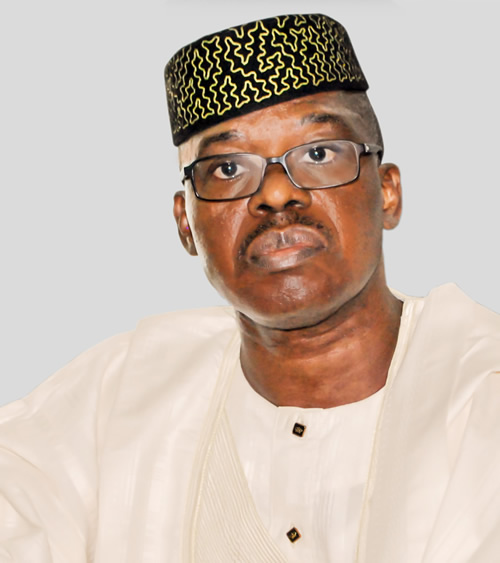
Photo File: Segun Oni
Former Ekiti State Governor, Segun Oni, has urged caution in Nigeria’s handling of national security reforms, warning that rushed reintegration of individuals linked to violent extremism could create deeper risks for the country’s stability.
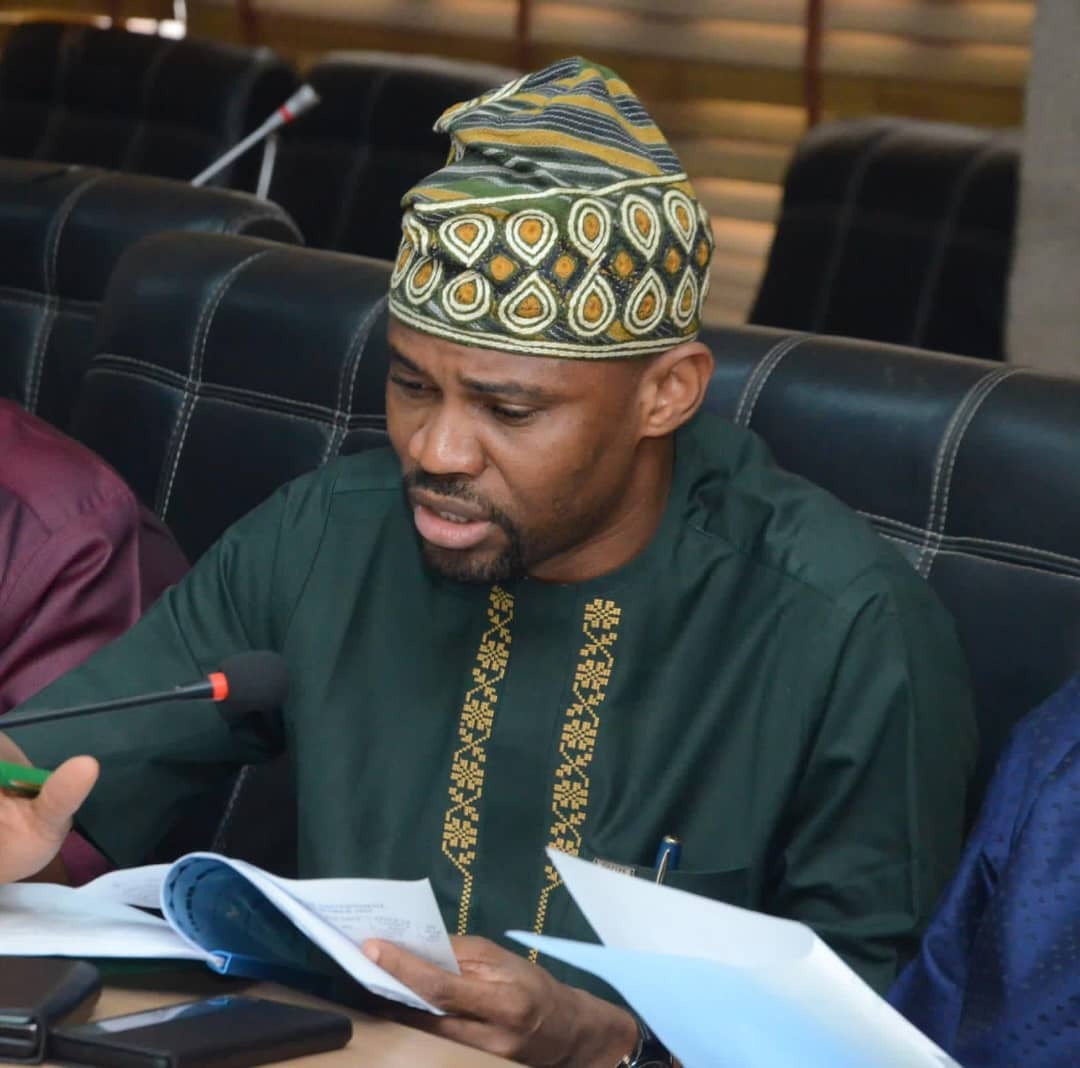
His remarks came on Wednesday during an extended media conversation on Frontline, a current affairs programme on Eagle 102.5 FM, Ilese Ijebu, Ogun State, where he revisited earlier comments on the economy, democracy, and governance while shifting deeper into security concerns and justice processes.
He argued that while government efforts at stabilising the economy and addressing insecurity are ongoing, policy decisions around deradicalisation and reintegration must be handled with strict scrutiny. According to him, the danger lies not only in insecurity itself but in policy shortcuts that may weaken long term safety structures.
He said, “I want to advise. The government should not be too much in a hurry to assimilate people who are proven terrorists into the system. Because they are assimilating them into the system is a risk.”
Background on Operation Safe Corridor
Recall that The Federal Government established Operation Safe Corridor (OPSC) in 2016 as a non-kinetic approach to ending the insurgency in the North-East. The initiative was designed to provide a safe passage for low-risk, “repentant” insurgents who voluntarily surrender their arms, offering them a pathway to de-radicalisation, rehabilitation, and eventual reintegration into society. Managed by a multi-agency committee including the Nigerian Military, DSS, and various MDAs, the programme operates primarily out of the Malam Sidi camp in Gombe State, where participants undergo a 6-to-12-month curriculum involving psychosocial support, religious reorientation, and vocational training.
Despite its humanitarian goals, OPSC has remained a lightning rod for controversy. While the government maintains it is a vital tool for depleting the ranks of Boko Haram and ISWAP without further bloodshed, critics and victims’ advocacy groups have frequently voiced opposition. The primary concerns center on the perceived injustice of “rewarding” former fighters with skills and stipends while millions of displaced victims remain in underserved IDP camps, as well as the underlying security fear that some graduates may return to the battlefield or act as informants for their former cells.
Recent Developments (April 2026)
In a significant expansion of the programme this month, the Federal Government announced that 744 rehabilitated ex-insurgents and victims of extremism have successfully completed their rehabilitation in Gombe and are slated for community reintegration.
This latest cohort is dominated by individuals from Borno State, who make up nearly 80% of the graduates. To manage public anxiety and ensure long-term security, the military has integrated National Identification Number (NIN) tracking into the discharge process, allowing for biometric monitoring of all graduates as they return to their respective local government areas.
Reacting, Oni added that rehabilitation without strict monitoring could fail, insisting that behavioural patterns linked to violence are not easily erased. He maintained that economic incentives tied to crime also make reintegration more complicated than it appears on paper.
He said, “Many of them are addicted to what they are doing. And, of course, because what they are doing also yields economic benefit, it makes the addiction strong. If you take them to any rehabilitation center and release them again to society, they will go back to crime.”
He stressed that national security frameworks must prioritise verification and monitoring rather than broad reintegration policies that lack long term safeguards. For him, the risk of relapse into crime remains high if systems are not carefully designed and enforced.
He said, “It is not an addiction that is so easy to overcome. So, we must be very, very cautious. I don’t see much prospect in getting so many in and, you know, people being in, they should be where they will be closely watched and where they can be closely watched.”
He also declined to support a full suspension of ongoing rehabilitation programmes but insisted on stronger alignment with judicial and security processes. In his view, parallel systems without legal grounding could weaken institutional credibility.
He said, “I would not say that. But I want to say that the process could be such that before a big day of death is issued, it is very, very, very absolute and the people who are doing it can put their hands on their chest and say, this guy is more likely to ever go back to crime.”
Justice Framework
His intervention quickly shifted the conversation into the broader justice framework, where questions were raised about whether Nigeria’s deradicalisation approach should follow established legal procedures such as the prerogative of mercy system.
He responded that legal structure should not be bypassed, warning that alternative pathways risk undermining due process. He insisted that institutional discipline remains essential in handling sensitive national security matters.
He said, “I agree with you absolutely. We are always creating new channels all the time. New channels should be used. If there is a process before, for prerogative of mercy, we should use the process. We should not just be creating absolute detours all the time.”
When pressed further on whether deradicalisation should be suspended to allow judicial processes take full control, he rejected the idea of suspension but insisted on coordination between systems.
He said, “I’m not saying suspended. I’m saying aligned properly. And you can still approach both.”
He clarified that his concern is not with rehabilitation itself but with institutional fragmentation, which he believes creates gaps in accountability and weakens the justice system.
He said, “Suspended means do not hear about it for now. But we can still be doing something about it, and proceed to be doing something about it, and create the right atmosphere to get things done.”
His position on security came after earlier sections of the interview where he acknowledged ongoing national instability but maintained that economic indicators such as exchange rate stability are showing gradual improvement.
He had earlier said, “I’m not surprised that foreign investors are getting more interested because where there is stability, of course, the investment world will take positive interest.”
He also maintained that inflation remains tied to both currency behaviour and agricultural productivity, stressing that insecurity continues to weaken domestic output.
He said, “The exchange rate boosts inflation, and inflation will be affected by domestic output. Domestic output, unfortunately, is suffering from the agri-sector where we are strongest.”
The former governor also linked rural insecurity to declining food production, noting that farmers are increasingly unable to operate safely across several regions of the country. He said, “Farmers are not as productive as they should be because the security index is very poor, and this affects everything else in the economy.”
He argued that even when macroeconomic stability is reported, insecurity continues to undermine real economic productivity at the grassroots level, especially in agriculture dependent communities.
He said, “We must encourage the security agencies, especially the military, they are doing a commendable job.” He added that citizens also have a role to play in supporting security operations through credible intelligence sharing, which he believes is essential for effective response. He said, “I believe citizens should find ways to complement them by passing credible intelligence so that they will be able to strike and strike accurately.”
He warned that insecurity has gone beyond insurgency zones, noting that kidnapping threats and rumours alone are enough to disrupt economic activity and social stability. He said, “When we hear of kidnapping or even rumours of kidnapping, everybody becomes jittery, and that alone affects economic activity.”
On Governance and Public Policy
The conversation later returned to governance and public policy, where he acknowledged government reforms but insisted that hardship remains a major concern for citizens across the country.
He said, “The hardship will not go overnight, and we have to understand that.”
He maintained that while reforms may be necessary, their social impact must be managed carefully to avoid prolonged suffering among citizens. He said, “Government should do more to bring the hardship down, but it will not go overnight, and we must recognise that reality.”
He also revisited his earlier position on palliatives, stating that while he is not a strong supporter of cash-based interventions, structured support remains necessary in the current environment. He said, “I am not a fan of palliatives, but we have to do it. There must be palliatives, and they must be done wisely and constructively.”
He suggested that institutions such as schools and faith based organisations could serve as more effective distribution channels for relief materials and support systems.
He said, “Institutions like educational institutions, institutions of worship and structured systems can be used to deliver support more effectively.”
He also maintained a cautious stance on the performance of state governors, noting that without access to financial records, he cannot make definitive judgments on their effectiveness.
He said, “I cannot say they are doing enough or not doing enough because I don’t have access to the books.”
His broader message on governance centred on accountability across all levels of government, insisting that public service delivery must improve regardless of institutional limitations. He said, “I believe every level of government should be encouraged to do more and find constructive ways of meeting the citizens where they are.”
He later returned to his earlier warning on democracy, insisting that Nigeria’s multi party system is increasingly being distorted by opportunism and weak institutional regulation.
He said, “To be honest, we are regressing. We are on the reverse.”
He argued that the proliferation of political parties without performance standards weakens democratic value and encourages political instability.
He said, “But 21 political parties or whatever number only creates opportunism.”
He maintained that party regulation should be tied to measurable electoral performance, not unlimited registration.
He said, “We should set a minimum percentage vote in national elections that a party must achieve to remain registered.”
He concluded by warning that without structural reforms in both security and democratic governance, Nigeria risks cycling through the same national challenges under different political arrangements.



 Eagle Fm